
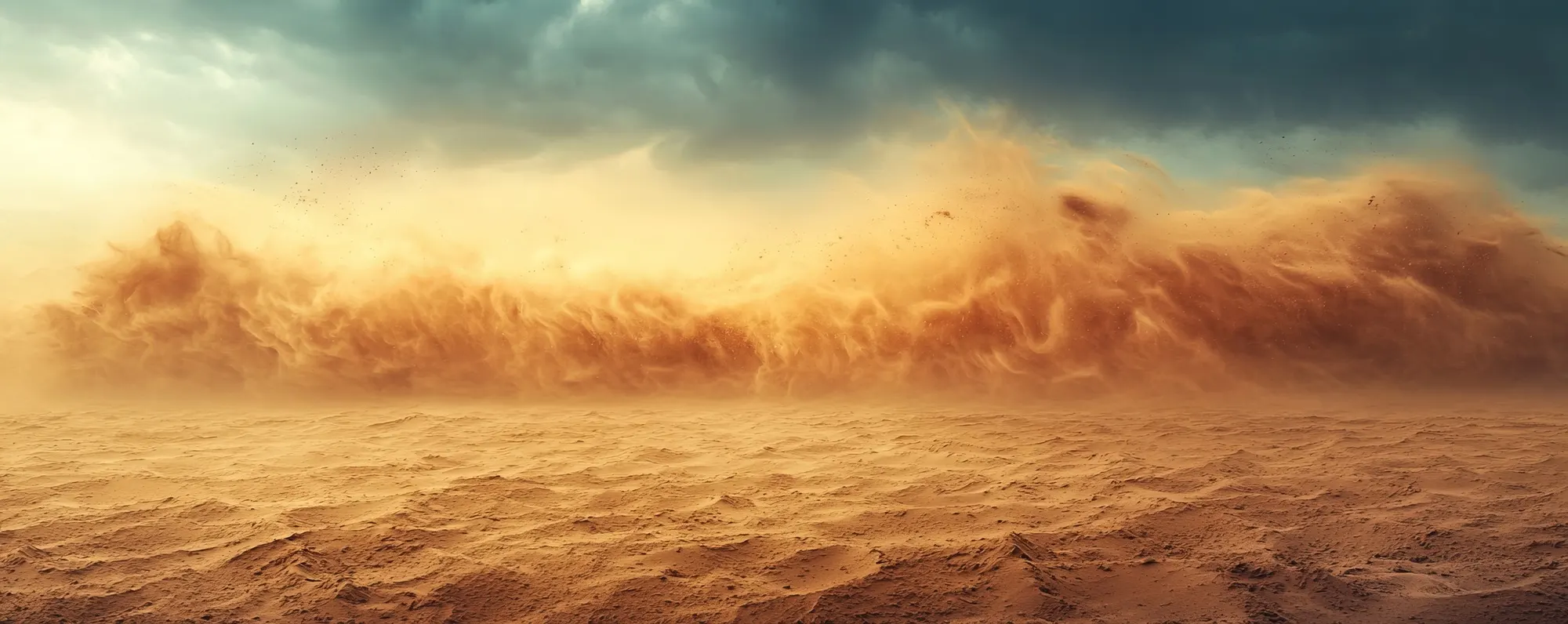
Every summer, the same conversation repeats across property management offices in Dubai, Sharjah and Abu Dhabi: the shamal blows for two days, the towers disappear behind an orange haze, and the following week the cleaning invoices arrive. The glass gets washed, the terraces get swept, the lobby returns to normal – and everyone assumes the event is over.
It isn’t. The visible dust is the least expensive part of sandstorm damage to UAE buildings. What actually costs money is the microscopic abrasion happening to your paint film, sealant joints and roof membrane every time wind-driven quartz hits a façade at 60 km/h, and the corrosive salt-and-carbonate paste that dust leaves behind when overnight humidity condenses on it.
This guide breaks down exactly what sand and dust do to building exteriors in the Emirates, which components fail first, how to spot damage before it becomes a structural repair, and which protective systems actually hold up in a desert climate. It is written for owners, facility managers and consultants responsible for buildings that have to survive thirty or more shamal seasons.
What Actually Happens to a Building During a UAE Sandstorm
A sandstorm subjects your building envelope to a sustained blast of hard mineral particles travelling at wind speed – the equivalent of low-pressure sandblasting applied to every exposed surface for hours at a time.
That comparison isn’t rhetorical. Commercial sandblasting works by propelling abrasive media at a surface to strip coatings and profile substrates. A shamal does the same thing with the same mineral, just less evenly and over a longer period. The difference is that sandblasting is deliberate and stops when the operator releases the trigger.
When Sandstorms Hit the Emirates
The UAE experiences two distinct dust seasons. The summer shamal is the dominant one: research summarised by NASA indicates these north-westerly winds typically start around the end of May, taper off by the middle of August, and reach their strongest speeds around midday. Winter shamals arrive with frontal systems between December and March, usually shorter but often sharper.
The threshold matters for property owners. Sustained winds above roughly 11 metres per second – about 40 km/h – are enough to lift sufficient dust to cut visibility below 3.5 kilometres, the point at which meteorologists classify the event as a dust storm. Below that threshold you still get deposition; above it you get abrasion.
Practically, this means the damaging season overlaps almost exactly with the period of peak thermal stress on your envelope. Sand arrives while surface temperatures on dark roofs and south-west elevations are at their annual maximum, which is why the two problems compound each other. Our guide to how extreme heat affects building structures in Dubai covers that thermal side in detail.
What Gulf Dust Is Actually Made Of
Regional dust is not soft, inert powder. Mineralogical studies across the Gulf consistently find quartz and calcite as the dominant components – a survey of dust fallout in Kuwait City measured quartz fractions ranging from roughly 26% to 67% of samples, with calcite making up 15% to 52%, plus smaller quantities of dolomite, gypsum and halite.
Quartz sits at 7 on the Mohs hardness scale. Architectural glass sits at about 5.5. Cured acrylic and polyurethane paint films sit far lower. Anodised aluminium and powder-coated steel are softer still at the surface. In other words, the airborne material is harder than almost every finish on your building.
Particle size compounds it. Measurements from a Sharjah study recorded dust particles between 1.6 and 38.4 microns, while Kuwait samples ranged from 1 to 25 microns. Coarse grains do the cutting; the fine fraction penetrates joints, filters, gaskets and drainage components that were never designed to exclude particles that small.
[IMAGE 1 – see brief below]
How Wind-Driven Sand Damages Building Exteriors
Sand attacks four elements of the envelope in a predictable order: coatings first, then sealants, then glass and metal, then the substrate underneath. Each stage takes longer than the last but costs considerably more to reverse.
Paint, Render and Textured Coatings
Abrasion removes the binder-rich surface layer of a coating first, exposing pigment and filler. The finish loses gloss, then colour saturation, then film thickness. On elevations facing the prevailing north-westerly, you can often see the difference by walking around a building – the windward face looks chalky and faded while the leeward face still holds its colour after the same number of years.
Once film thickness drops below the manufacturer’s specified dry-film minimum, the coating stops functioning as a barrier. Water vapour and chloride ions begin reaching the render or concrete behind it. At that point repainting alone is no longer sufficient; the substrate needs assessment before any new system goes on.
Glass and Glazing Systems
Repeated sand impact produces microscopic pitting across the glass surface. Individually the pits are invisible, but collectively they scatter light, which is why older Dubai towers develop a permanent haze that survives every cleaning cycle. Pitting cannot be polished out economically on a full curtain wall – once it is there, the glass is effectively consumed.
Dust also acts as an abrasive during cleaning itself. Wiping a dusty façade with insufficient pre-rinse drags quartz particles across the glass under pressure, producing fine circular scratching that is entirely avoidable with the right method.
Sealants and Movement Joints
This is the failure most owners overlook and the one that causes the most secondary damage. Perimeter sealants around windows, panel joints and movement joints are soft by design, because they have to accommodate thermal expansion. That softness makes them the easiest target for abrasion.
Sand erodes the sealant surface, embeds itself in the material, and creates a stiffened, contaminated skin that loses elasticity. The joint then splits during the next hot-cold cycle, and water follows. Regular inspection of concrete expansion joint detailing and the specification of abrasion-tolerant products such as an MS polymer hybrid sealant or a high-movement polyurethane sealant extends joint life substantially compared with standard grades.
Metal Cladding, Copings and Flashings
Coated steel and aluminium lose their protective layer at exposed edges, upstands and fixing points first, because those geometries concentrate airflow and therefore particle impact. Once the coating breaches, corrosion starts under the remaining film and spreads laterally.
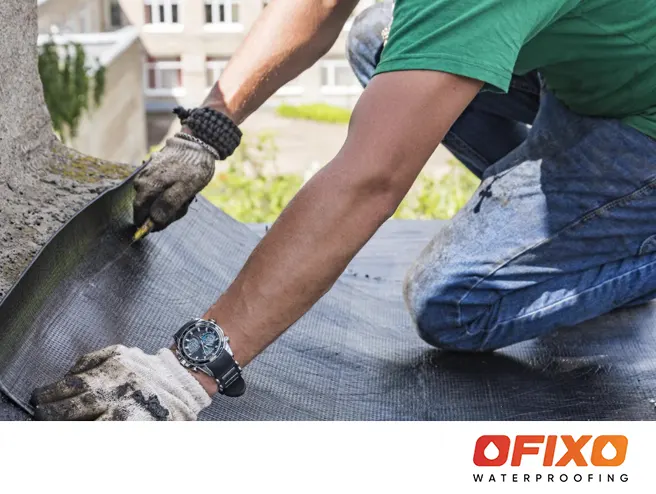
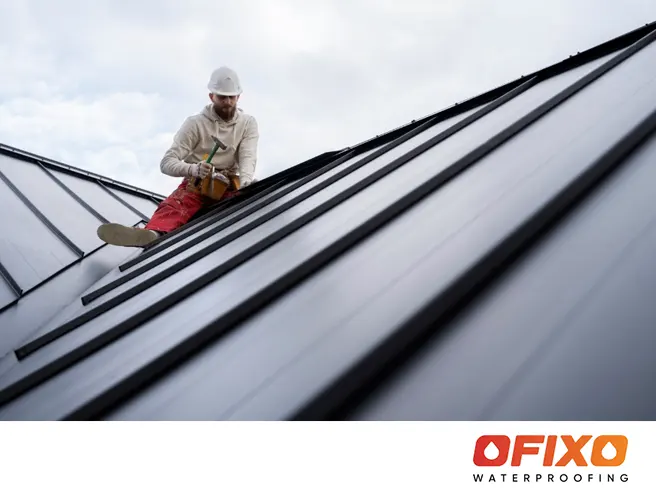
Roof sheeting is particularly vulnerable at laps and fastener heads. Where sheeting has begun to show edge corrosion or lap movement, dedicated metal roof waterproofing is usually more economical than sheet replacement, provided it is applied before perforation.
Desert Climate Property Damage Goes Beyond Abrasion
The second stage of damage is chemical, and it begins the moment deposited dust meets moisture.
Gulf dust carries carbonates, sulphates and – near the coast and around sabkha ground – chlorides. Those salts are hygroscopic. When overnight relative humidity climbs and dew forms on a façade, the dust layer absorbs it and turns into a damp, mildly aggressive film that sits directly against your coating for several hours before the morning sun drives it off. Repeat that cycle across a summer and you have sustained chemical exposure rather than a single event.
Three consequences follow:
- Accelerated carbonation. Damp carbonate-rich deposits on exposed concrete speed the drop in surface alkalinity that eventually depassivates embedded steel. Applying an anti-carbonation coating as part of a planned corrosion protection coating programme is the standard defence.
- Chloride ingress. Salt carried in dust adds to the coastal chloride load already attacking reinforcement. Where rebar has begun to corrode, expansion cracks the cover concrete and produces the spalling familiar on older Emirates façades – repairable through concrete spalling repair using a polymer modified repair mortar and a zinc rich rebar primer.
- Soiling that sets. Once dampened and dried repeatedly, dust bonds to porous surfaces and stops washing off. Cleaning then requires chemical or mechanical intervention, which itself removes coating life.
The humidity half of this equation deserves its own attention. Our detailed breakdown of how humidity affects UAE properties explains the moisture cycles that make dust deposits so much more damaging here than in dry inland deserts.
Roofs Absorb the Worst of a Sandstorm
Roofs take horizontal wind loading and vertical deposition simultaneously, which is why they generate more post-sandstorm defects than any other part of the envelope.
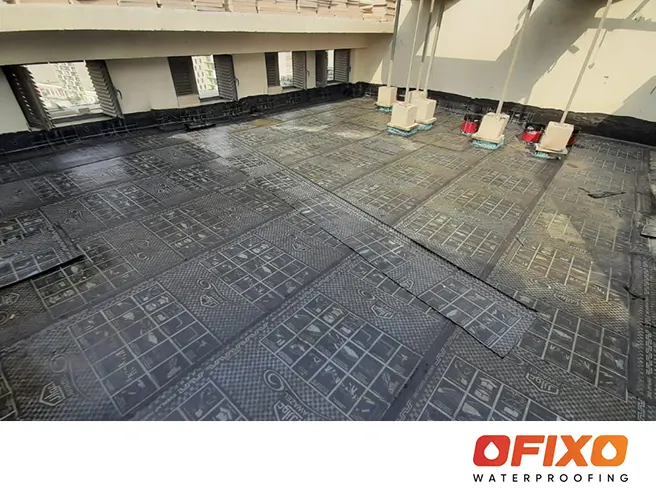
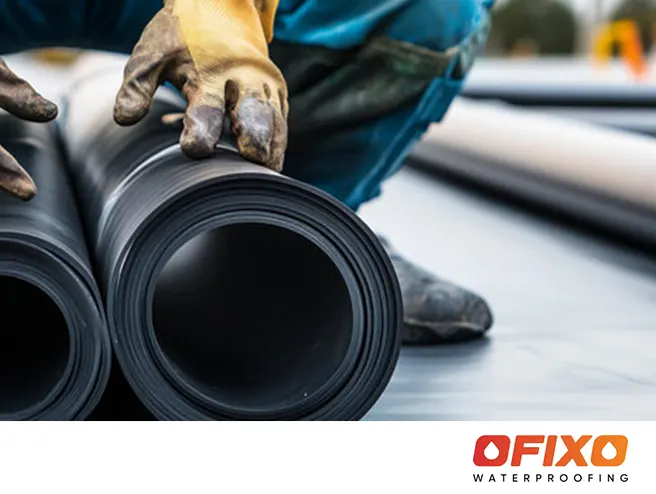
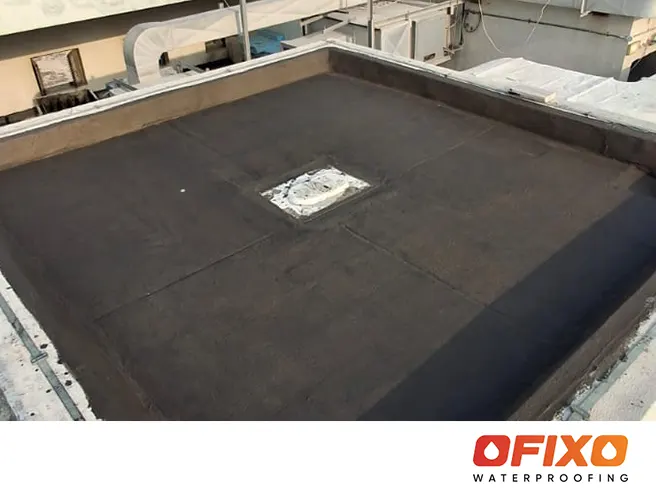
Exposed bituminous membranes lose their mineral surfacing under repeated abrasion, exposing the bitumen to direct UV and accelerating embrittlement. Where surfacing has been stripped in patches, overlay with a modern membrane waterproofing system – an APP modified bitumen membrane or a reinforced sheet – restores the barrier without full removal in many cases.
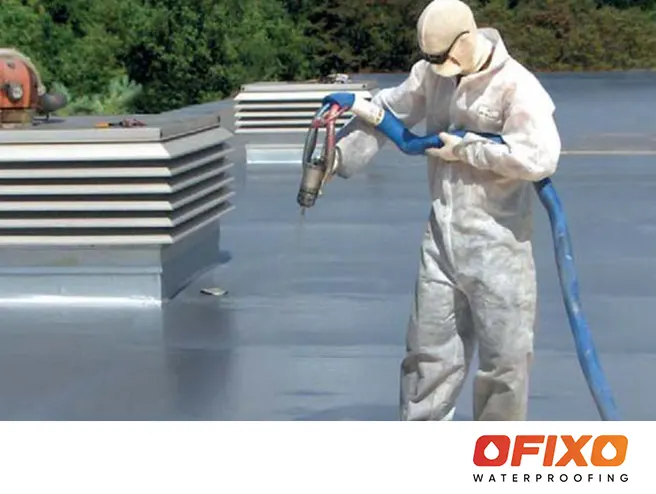
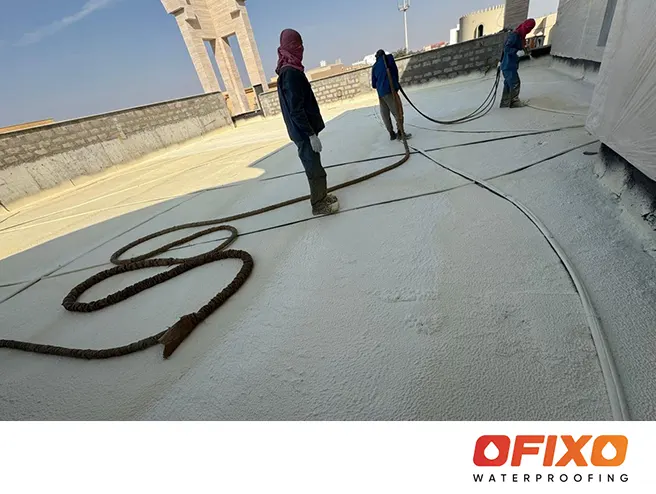
Liquid systems behave differently. A correctly specified liquid applied waterproofing membrane can be topped up in situ, which makes it attractive for roofs that see heavy foot traffic and heavy dust. For high-abrasion decks and plant areas, polyurea waterproofing offers markedly better wear resistance than conventional coatings – a polyurea spray coating builds a seamless, tough film in a single application.
Where the deck is sound but the surface is degraded, a cementitious waterproofing system provides a rigid, mineral-based barrier that tolerates dust abrasion well. Choosing between these families is a genuine engineering decision, and our comparison of polyurethane versus bitumen systems sets out the trade-offs.
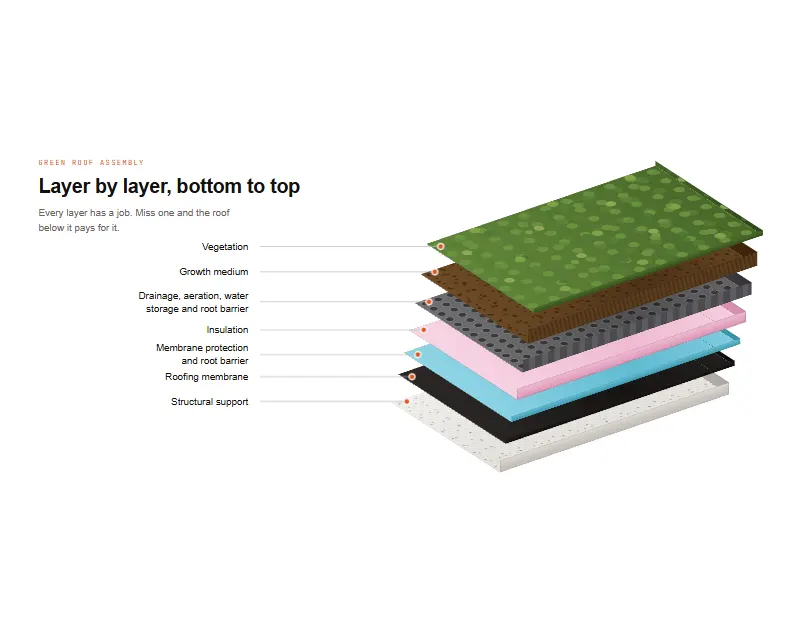
Green roofs and paver systems deserve a note: they shield the membrane from direct abrasion, but their drainage layers clog faster in a dusty environment and need scheduled inspection. Properly detailed green roof systems account for this in the drainage design.
Solar arrays illustrate the deposition problem quantitatively. A study at UAE University in Al Ain recorded around 13% power loss on panels left uncleaned for three months, against 3% after ten days. Separate work in Sharjah measured a 12.7% loss as dust density built up over five months. The same accumulation rates apply to every horizontal surface on your roof – the panels just make it measurable.
[IMAGE 2 – see brief below]
Where the Sand Ends Up: Drainage, Pits and Podiums
Deposition is a transport problem. Sand does not stay where it lands – rainfall and washdown move it into the lowest point of every system, and that is where the blockages form.
Roof drainage. Outlets and gutters silt up first. A partially blocked outlet turns the next rain event into ponding, and ponding is the single most reliable way to shorten membrane life. Scheduled roof gutter clearance before and after the shamal season prevents most of these failures at negligible cost.
Lift pits. Silt washes down shafts and settles in the pit, where it holds moisture against the structure and blinds the sump pump intake. Persistent damp in a pit is almost always a combination of groundwater and blocked drainage, and it needs proper lift pit treatment rather than repeated pumping.
Basements and car parks. Ramp entrances funnel wind-blown sand directly into structures. It accumulates against walls, retains washdown water and attacks the wall-slab junction – the exact detail that basement waterproofing is designed to protect. On the deck itself, grit ground under tyres wears the surface fast; a car park flooring system using a purpose-made car park deck coating resists this far better than bare concrete.
Water tanks. Fine dust enters through vents and inspection covers that are not properly gasketed, settling as sediment. Tanks with degraded internal linings then hold that sediment against a compromised surface. Both water tank waterproofing and GRP lining for water tank applications should be checked after any major dust event.
Industrial and warehouse floors. Dust tracked in from loading yards abrades floor coatings continuously. Facilities running sensitive equipment also find that airborne dust affects static control, which is where ESD epoxy flooring and hard-wearing warehouse epoxy flooring earn their specification. Our warehouse maintenance guide covers the wider programme.
Signs Your Building Already Has Sandstorm Damage
Most sandstorm damage announces itself well before it becomes structural, provided someone is looking for the right indicators.
Check for the following on a routine walk-around:
- Noticeable colour difference between the north-west elevation and the sheltered elevations of the same building
- Chalking – a powdery residue on your hand after rubbing a painted surface
- Sealant joints that look matte, gritty or hardened, or that have pulled away at one edge
- Permanent haze on glazing that returns immediately after cleaning
- Rust bleeding at cladding fixings, copings and parapet flashings
- Standing water on the roof more than 48 hours after rain
- Silt visible in gutters, outlets, balcony drains or the lift pit
- Fine cracking, blistering or rust staining on exposed concrete
- Hollow-sounding areas when a concrete façade is tapped – an early spalling indicator
Any of the last three warrant a proper survey rather than a visual check. Our reference on visual signs of structural problems explains what each symptom typically indicates, and when an expert inspection becomes necessary sets the threshold for calling in specialists. Because dust deposits hold moisture invisibly, a hidden moisture detection survey often reveals problems a visual inspection misses entirely.
Materials and Systems That Survive Desert Abrasion
Specification decisions made once determine how a building performs across the next twenty shamal seasons. Four principles hold consistently in UAE conditions.
Choose hardness and elasticity together. A brittle hard coating cracks under thermal movement; a soft elastic one abrades away. Polyurea and polyurethane hybrids sit in the useful middle, which is why they dominate high-exposure roof and deck applications here.
Seal porosity before it collects dust. Open-pored concrete and render trap fine particles that then hold moisture. A penetrating acrylic concrete sealer closes that porosity and makes surfaces far easier to clean.
Build in migrating protection where reinforcement is at risk. A migrating corrosion inhibitor reaches steel that surface coatings cannot, and is standard practice on repairs to chloride-contaminated structures.
Match the floor system to the grit load. High-traffic industrial areas need mechanical wear resistance, not just chemical resistance. A quartz broadcast flake system or a heavy-duty industrial epoxy flooring build-up handles abrasive dust far better than a thin roller-applied coating.
Where damage has already progressed to the substrate, restoration comes before protection. Concrete restoration re-establishes a sound surface, concrete resurfacing restores profile and finish, and in cases where section loss has affected capacity, structural strengthening using techniques such as CFRP wrapping restores load path without adding significant mass.
What to Do in the 72 Hours After a Major Sandstorm
Acting quickly after a storm prevents most of the secondary damage, because it removes the dust before humidity turns it into a chemical problem.
- Clear drainage first, not glass. Roof outlets, gutters, balcony drains and podium channels take priority. Blocked drainage causes far more expensive damage than dirty windows.
- Rinse before you wipe. Flood surfaces with low-pressure water to float grit off before any mechanical contact. Wiping first grinds quartz into the finish.
- Avoid high-pressure jetting on coated surfaces. It strips coating and drives water into open joints. Use it on hardstanding, not façades or membranes.
- Inspect sealants and flashings while the building is clean. Defects are visible for a short window after washing and invisible again once dust resettles.
- Check the roof for ponding and displaced material. Note anything that has moved, lifted or filled with silt.
- Photograph and log everything. A dated record turns scattered observations into a maintenance case you can budget against.
Storm response is unpredictable by nature, which is why it belongs in a contingency line rather than the routine budget. Our guidance on building an unexpected repair budget covers how to size that reserve.
Building an Annual Sandstorm Protection Plan
The most cost-effective approach treats dust as a scheduled condition rather than an emergency, because in the UAE that is exactly what it is.
A workable annual cycle looks like this. In March and April, before the summer shamal season, complete a full envelope inspection, clear all drainage, repair failed sealant joints and touch up any coating breaches. Our pre-summer building preparation checklist sets out the full scope.
Through May to September, run reactive clearance after each significant storm and keep façade cleaning frequency high enough that deposits never bond. In October and November, carry out the main condition survey while temperatures allow proper inspection access, and schedule any coating or membrane work for the cooler months. Between December and February, execute planned remedial work and remain alert to winter shamal events.
For portfolios, formalising this into an annual maintenance contract is usually cheaper than reactive callouts, because inspection frequency rises and defects get caught while they are still cosmetic. Planned building maintenance across a portfolio, or targeted villa maintenance for residential assets, delivers the same benefit at smaller scale. To structure the spend, see our framework for annual building maintenance budget planning.
The financial case is straightforward. Envelope condition is one of the clearest drivers of asset value in this market – a point examined in our analysis of how building condition affects property value in Dubai. A faded, streaked façade signals deferred maintenance to every prospective tenant and buyer who sees it.
Frequently Asked Questions
How often should a UAE façade be cleaned during sandstorm season?
During the summer shamal period, most commercial buildings benefit from cleaning every four to six weeks, plus reactive cleaning after any major storm. The goal is to remove deposits before repeated humidity cycles bond them to the surface, since bonded soiling requires aggressive cleaning that shortens coating life.
Does sandstorm damage affect new buildings too?
Yes. New buildings resist abrasion better because coatings and sealants are at full thickness and elasticity, but they accumulate exactly the same dust in drainage systems and lift pits. Blocked outlets on a new roof cause ponding just as reliably as on an old one. Buildings still in fit-out are particularly exposed, which is why sequencing matters on fit out projects running through the summer.
Can sandstorm damage cause structural problems?
Not directly – wind-blown sand does not carry enough energy to affect structural capacity. It does so indirectly. Abrasion breaches protective coatings, dust deposits hold moisture and chlorides against concrete, reinforcement corrodes, and corroding steel expands and spalls the cover. That chain takes years, but it ends in genuine structural repair.
Which building elements should be inspected first after a storm?
Roof drainage outlets and gutters, perimeter and movement sealant joints, cladding fixings and flashings, and lift pits. These four account for the majority of post-storm defects and are all inexpensive to address early.
Is waterproofing relevant to sandstorm protection?
Directly. Sandstorm damage mostly converts into water damage – abraded membranes, split joints and blocked drainage all end in moisture reaching the structure. A sound waterproofing system, particularly at roof level, is the barrier that stops abrasion from becoming leakage. Where leaks have already started, targeted water leakage injection can seal active paths without full reconstruction.
Do dust storms in the UAE seem to be getting worse?
Regional monitoring has shown increased aerosol loading over the Gulf across recent decades, linked to land-use change and drought in the upwind source regions of Iraq and eastern Syria rather than to conditions inside the Emirates. For asset planning, the safe assumption is that dust exposure will remain at least at present levels.
Protecting Your Building Against the Desert
Sandstorms are not an anomaly in the UAE – they are a design condition, as predictable as summer heat and coastal salinity. Buildings that are specified, coated and maintained with that in mind hold their finish and their value. Buildings that are not degrade quietly for a decade and then present an unavoidable bill.
The intervention points are unglamorous and cheap: clear drainage before the season, repair sealants before they split, and specify coatings hard enough to survive quartz at 60 km/h. Everything expensive downstream – spalling, structural repair, full façade recoating – starts with one of those three being skipped.
If you are unsure how your building has weathered recent seasons, the right first step is a condition survey of the envelope, roof and drainage. Ofixo Technical Services has been protecting structures across the Emirates since 2003, and our teams can assess the damage, specify the remedy and carry out the work. Contact our team to arrange an inspection.