
Roof Waterproofing Category · Dubai & UAE
Liquid Applied Waterproofing – Brushed, Rolled, or Sprayed. Always Seamless.
A category of waterproofing systems where the membrane is applied in liquid form – by brush, roller, or spray – then cures in-place to form a continuous, joint-free protective barrier. Choose from acrylic, polyurethane, polyurea, bitumen, or hybrid cementitious-acrylic systems for the right balance of cost, flexibility, and service life.
- Brush · Roller · Spray
- Acrylic to Polyurea
- Multi-substrate
About the Category
What is Liquid Applied Waterproofing?
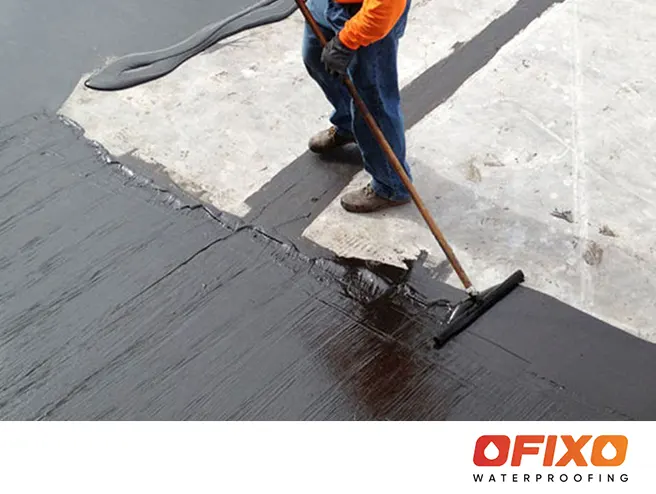
Liquid Applied Waterproofing – sometimes shortened to LAWM (Liquid Applied Waterproofing Membrane) – refers to any waterproofing system supplied in liquid form and applied directly to the substrate by brush, roller, or spray. Once cured, the liquid forms a continuous elastic membrane with no joints, no overlaps, and no weak points.
It is one of the most popular waterproofing categories for UAE roofs, balconies, podiums, wet areas, and basements – valued for its ability to conform to complex shapes, bond to multiple substrates, and deliver a seamless leak-free finish. The right choice depends on the substrate, exposure conditions, expected service life, and budget – five system types are commonly specified across Dubai projects.
Why Liquid Applied
Five Reasons Liquid Systems Dominate Modern Roofing.
Liquid applied membranes solve problems that sheet membranes can’t – making them the default specification for most contemporary UAE projects.
Truly Seamless
Liquid cures in-place to a continuous joint-free membrane – no overlaps, no seams, no welded joints that can fail over time.
Conforms to Any Shape
Pours into corners, around pipes, over upstands, and across irregular geometries that sheet membranes can’t navigate.
Multi Substrate Compatible
Bonds to concrete, screed, metal, existing bitumen, and most masonry – perfect for new builds and refurbishments alike.
Three Application Methods
Choose brush for detail work, roller for flat areas, or spray for fast coverage – adapt the method to the site.
Cost Effective
Lower material handling costs and faster installation than sheet membrane systems – particularly for complex roofs and small areas.
Five Systems
Choose Your Liquid Waterproofing Chemistry.
Five liquid system types dominate Dubai roofing specs. Each balances cost, flexibility, cure speed, and service life differently – we’ll recommend the right one for your project after a free site survey.
Acrylic Liquid Membrane
Best for budgetWater-based acrylic emulsion – easy to apply, low odour, UV-resistant after cure. Most economical liquid option. Service life typically 10–15 years. Ideal for residential roofs and balconies on a tight budget.
Polyurethane (PU) Liquid
Best all rounderSingle-component polyurethane – highly flexible (300%+ elongation), excellent crack-bridging. The most commonly specified liquid system in UAE. Service life 15–20 years. Suits most flat roofs, terraces, and podiums.
Polyurea Spray
Best for speedTwo-component plural-component spray. Cures in seconds, 400–600% elongation, exceptional chemical resistance. Service life 15–25 years. Premium choice for metal roofs, industrial floors, and tight project timelines.
SBS Modified Bitumen Liquid
Best over existing bitumenCold-applied bituminous liquid with SBS rubber modifiers for flexibility. Bonds perfectly over existing torch-applied bitumen – no tear-off needed. Service life 12–18 years. Ideal for refurbishment projects.
Cementitious Acrylic Hybrid
Best for concrete bondingTwo-component system combining cement (for adhesion to concrete) with acrylic polymer (for flexibility). Resists both positive and negative pressure. Service life 12–18 years. Ideal for water tanks, pools, basements, and wet areas.
How It’s Applied
Three Ways to Apply Liquid Waterproofing.
The application method is chosen based on roof geometry, area size, project speed, and the chemistry of the liquid being applied.
Brush
Detail workBrushed application is reserved for detail work – corners, parapet upstands, pipe collars, drainage outlets, and tight transitions. Slow but precise. The applicator can control thickness, work product into surface irregularities, and reach geometry no other method can.
Roller
Flat areasRoller application is the default for flat areas – fast coverage with uniform thickness. The applicator dips a long-handled roller in the liquid, then applies in single-direction passes. Two coats are typically applied perpendicular to each other for full coverage.
Spray
Speed & complex shapesSpray application is the fastest method – used for large industrial areas, plural-component systems (polyurea), and complex shapes that defy roller coverage. Requires specialised equipment and a trained operator, but delivers unmatched speed and consistency.
Step by Step
Our 6-Step Liquid Applied Waterproofing Process.
All five liquid system types follow a similar disciplined sequence – only the specific products, primers, and cure times differ between chemistries.
-
01
Surface Preparation
Clean substrate of dust, oil, paint, and loose debris. Repair cracks, honeycombs, and damaged areas with polymer-modified mortar. Provide proper slope for drainage.
-
02
Primer Application
Apply system-specific primer suited to the substrate (concrete primer, metal primer, or bitumen primer). Allow tack-off before next coat – typically 30 minutes to a few hours depending on chemistry.
-
03
First Liquid Coat
Apply the first liquid waterproofing coat using brush, roller, or spray – in a single direction. Achieve uniform film thickness across the full area.
-
04
Reinforcement at Details
Embed glass-fibre fabric or polyester reinforcement mesh at corners, junctions, expansion joints, and around penetrations – bedded between coats for crack-bridging.
-
05
Second Liquid Coat
Apply the second liquid coat perpendicular to the first – ensures complete coverage and the specified total dry film thickness.
-
06
Quality Check & Testing
Visual inspection for pinholes, dry-film-thickness measurement at multiple points, and 24–48 hour water ponding test where the geometry allows. Handover with documented warranty.
Why Liquid Wins
Six Reasons Liquid Systems Replace Sheet Membranes.
Each advantage solves a specific limitation of traditional torch-applied or self-adhesive sheet systems.
Truly Seamless Finish
Liquid cures in-place to a continuous joint-free membrane – eliminating the failure points that plague sheet systems.
Complex Geometry Coverage
Conforms to irregular shapes, around penetrations, over upstands and parapets – geometry that sheet membranes can’t follow.
Bonds to Multiple Substrates
Adheres to concrete, screed, metal, existing bitumen, and most masonry – ideal for refurbishment over existing waterproofing.
Three Application Methods
Brush for detail, roller for flat areas, spray for speed – adapt the method to the site without changing the system.
No Flame, No Torch
Most liquid systems are cold-applied – eliminating the fire risk and insurance complications of torch-applied sheet membranes.
Cost Effective on Complex Roofs
Lower material handling costs and faster install on roofs with multiple penetrations, skylights, and HVAC equipment.
Where It’s Used
Liquid Waterproofing Across Dubai Projects.
From small balcony refurbishments to large industrial podiums – liquid applied membranes adapt to virtually any waterproofing requirement.
Flat Roofs & Terraces
Primary use case – exposed flat roofs, podium decks, and terraces across residential, commercial, and industrial buildings.
Balconies & Podiums
Trafficked balconies, planted podiums, and rooftop terraces where complex geometries rule out sheet membranes.
Wet Rooms & Bathrooms
Bathroom floors, walls, and shower enclosures – direct tile application possible on cementitious-hybrid systems.
Water Tanks
Potable-water-grade hybrid systems safe for direct contact with drinking water – tanks and reservoirs.
Below Grade & Basements
Negative-side waterproofing for basements, retaining walls, and below-grade structures – cementitious-hybrid leading choice.
Refurbishment Over Existing
Cold-applied systems bonded over existing bitumen, screed, or aged membranes – no tear-off required.
Not Sure Which Liquid System Is Right for You?
Book a free site survey – we'll inspect your substrate, recommend the right liquid system, and quote within 24 hours.
or WhatsApp +971 55 770 5568
Answered
Liquid Applied Waterproofing FAQs.
The questions UAE property owners ask most about liquid waterproofing systems and how to choose between them.
What is liquid applied waterproofing?
Liquid applied waterproofing is a category of waterproofing systems supplied in liquid form and applied directly to the substrate by brush, roller, or spray. Once cured in-place, the liquid forms a continuous elastic membrane with no joints, no overlaps, and no weak points – a single seamless waterproof barrier.
How is liquid applied waterproofing different from sheet membranes?
Sheet membranes (like torch-applied bitumen or EPDM) are supplied as pre-fabricated rolls and welded or fastened on-site – meaning every roll has overlap joints. Liquid systems are applied as continuous coatings, so there are no joints at all. Liquid handles complex geometries better; sheet systems are faster on large flat areas with simple geometry.
Which liquid waterproofing system is best for Dubai’s climate?
For most UAE roofs, polyurethane (PU) liquid membrane is the default choice – it balances cost, flexibility, UV resistance, and 15–20 year service life. For premium long-life applications, polyurea spray. For budget projects, acrylic. For tanks and below-grade structures, cementitious-acrylic hybrid. We assess each project individually before recommending.
Can liquid waterproofing be applied over existing roofing?
Yes – one of liquid waterproofing’s biggest advantages is that most systems can be applied over existing bitumen, screed, or aged membrane after proper surface preparation. SBS-modified bitumen liquid is particularly designed for this. This eliminates the cost and disruption of tear-off and replacement.
How long does liquid applied waterproofing last?
Service life varies by chemistry: acrylic 10–15 years, polyurethane 15–20 years, polyurea 15–25 years, SBS-bitumen 12–18 years, cementitious-hybrid 12–18 years. Actual longevity depends on UV exposure, foot traffic, substrate movement, and quality of installation. All Ofixotech projects include workmanship warranty.
What thickness is required for liquid waterproofing?
Typical dry film thickness ranges from 1 mm to 3 mm depending on the system and application. Polyurethane and acrylic systems are usually applied at 1.5–2 mm total thickness across two coats. Polyurea waterproofing thickness is 0.8–1.5 mm. Cementitious-acrylic systems are typically 1–2 mm per coat, two coats minimum.
Does the surface need preparation before liquid waterproofing?
Yes – surface preparation is the most critical step in any liquid waterproofing installation. The substrate must be clean, dry, structurally sound, and free of contaminants. Cracks must be repaired, sharp edges rounded, and a system-compatible primer applied. Poor preparation is the leading cause of liquid waterproofing failure.
Is liquid waterproofing safe for water tanks?
Cementitious-acrylic hybrid systems and certain polyurethane formulations are certified safe for potable water contact and are widely used for water tanks and reservoirs. Always confirm with the contractor that the specific product carries WRAS or equivalent potable-water certification before specifying.
Explore Specific Systems
Dive Into a Specific Liquid System.
Each of the liquid systems mentioned above has its own dedicated page with full technical detail, application processes, and case studies.
Membrane Waterproofing in Dubai
Specialist membrane waterproofing in Dubai – SBS and APP bituminous waterproofing membrane systems plus liquid-applied waterproofing membranes. Manufacturer-warranted, installed by certified applicators on flat concrete roofs, podiums, and decks.
Learn more →Best for premium 25–50 year roofsEPDM Waterproofing in Dubai
Specialist EPDM waterproofing & EPDM roofing in Dubai – synthetic rubber membrane systems with 25-50 year service life. Heat-welded seams, UV / ozone / chemical resistant, suitable for exposed roofs and submerged applications.
Learn more →Best for same-day return to servicePolyurea Coating in Dubai
Specialist polyurea coating in Dubai – polyurea waterproofing systems that cure in seconds and deliver 15-25 years of seamless, chemical-resistant protection. Polyurea coating UAE-wide for roofs, tanks, pools, podium decks, bridges, and industrial slabs.
Learn more →Best for tanks, basements & wet areasCementitious Waterproofing in Dubai
Specialist cementitious waterproofing in Dubai – rigid and flexible cement-based waterproof coatings that bond chemically with concrete and stop water from both positive and negative pressure directions. The trusted choice for tanks, basements, pools, and wet areas across the UAE.
Learn more →Best for HVAC savings & green roofsGreen Combo Roofing in Dubai
Specialist green roof system in Dubai – Green Combo Roofing is a dual-purpose green roofing system that delivers waterproofing and thermal insulation in one integrated build-up. 70 mm PU foam, 20-25 year service life, root-resistant, and Dubai Municipality approved across the UAE.
Learn more →Best for steel, aluminium & industrial roofsMetal Roof Waterproofing in Dubai
Metal roof waterproofing in Dubai – specialist coatings, sealants, and membranes for steel, aluminium, zinc, and galvanised roofs. Adds 15–25 years of service life at 50–70% of full replacement cost.
Learn more →Roof Gutter ServiceRoof Gutter Service in Dubai
Specialist roof gutter service in Dubai – cleaning, repair, joint resealing, downpipe replacement, and scheduled maintenance for villas, towers, and commercial properties across the UAE. Same-day inspections, 2-year workmanship warranty.
Learn more →