
Potable-Safe Waterproofing · Dubai & UAE
Water Tank Waterproofing – Potable-Safe. Submersion-Tested. Built for Dubai Tanks.
Specialist waterproofing and lining for potable water tanks, fire reserve tanks, sewage tanks, and irrigation tanks across Dubai villas, towers, and commercial facilities. Food-grade certified materials safe for direct contact with drinking water. Internal or external systems. Concrete, GRP, and metal tanks.
- Food-grade certified
- Internal or external
- Submerged service
About the Service
What is Water Tank Waterproofing?
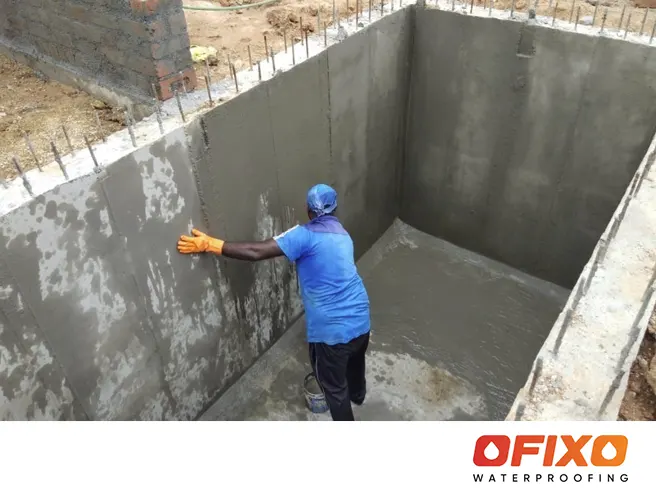
Water tank waterproofing is the specialist practice of applying a continuous, food-grade-certified waterproof lining to the inside or outside of a water tank – sealing it against leakage out, contamination in, and the gradual degradation of concrete or metal under permanent water contact.
Unlike roof or basement waterproofing – which fights occasional water – a tank lining lives in constant submersion. The system must be chemically inert, hydrostatically resistant from both sides, mechanically tough enough for cleaning crews, and certified safe for direct contact with drinking water. We waterproof concrete tanks, GRP tanks, metal tanks, and swimming pools across Dubai.
Why It Matters
Four Reasons You Can’t Skip Tank Waterproofing.
A failing tank is one of the most expensive defects in Dubai property – contaminated water risks resident health, structural damage spreads to surrounding rooms, and replacement costs many times more than a proper lining.
Protects Water Quality
Proper food-grade linings prevent contamination from concrete leaching, rust particles, biofilm growth, and chemical migration – keeping your drinking water safe.
Stops Tank Leakage
Stops outward leakage that damages adjacent walls, foundations, and the structures the tank sits on or near – especially critical for rooftop tanks.
Prevents Tank Degradation
Concrete tanks suffer from rebar corrosion when water passes through the walls; metal tanks rust from inside out. A lining stops both.
DEWA & Municipality Compliance
Dubai Municipality and DEWA require potable water tanks to meet specific cleanliness and material standards. Non-compliant tanks fail inspection.
Four Tank Materials
Different Tanks. Different Systems. Same Standard.
Every tank material has its own waterproofing requirements. We tailor each system to the substrate – concrete needs different chemistry than GRP, GRP differs from metal.
Concrete Tanks
Most common in UAEUnderground or rooftop concrete water tanks across Dubai villas and commercial buildings. Concrete is porous and leaches over time – our cementitious-crystalline or food-grade epoxy linings seal the substrate chemically and stop both leakage and contamination. The standard solution.
GRP-Lined Tanks
Pre-built panel tanksGlass-Reinforced Plastic panel tanks (Dutchman, sectional, or hot-pressed). The most common modern tank in commercial Dubai installations. We re-line aged GRP tanks with food-grade epoxy systems or GRP relining where panels are damaged. Cross-link: see GRP Lining for full detail.
Metal Tanks
Stainless & galvanisedStainless steel or galvanised metal tanks – common in rooftop and fire reserve applications. Metal tanks rust internally over time, even galvanised. Food-grade epoxy or polyurea linings stop further corrosion and seal pinholes that have already developed.
Swimming Pools
Concrete or shotcrete poolsResidential and commercial swimming pools – concrete or shotcrete construction. Pool linings must resist chlorine, salt (for saline pools), and constant pressure. Polyurea, cementitious-acrylic hybrid, and pool-grade epoxy systems are our standard options.
Certified Safe
Every Drop You Drink Passed Through This Membrane.
Drinking water tanks demand more than just waterproofing – they need materials proven safe for direct contact with potable water. We only install systems with documented food-grade certification.
Food-Grade Materials
Every system we install for drinking water tanks uses materials with documented food-grade or potable-water-contact certification – typically WRAS, NSF, or equivalent. We provide the certification with every project.
No Leaching or Migration
Food-grade linings are formulated to be chemically inert in submersion – no leaching of plasticisers, solvents, or unreacted resin into the stored water. Tested across years of permanent contact.
Smooth, Cleanable Finish
The cured lining has a smooth, dense surface that prevents biofilm growth and resists chlorine sterilisation. Tank cleaning crews can scrub and disinfect without damaging the membrane.
✓ Certification documentation provided with every potable water tank project
What We Do
Six Tank Waterproofing Services Across Dubai.
From a single villa tank refurbishment to multi-tower commercial maintenance contracts – we cover every scope of tank work.
New Tank Lining
Apply food-grade lining to newly-built concrete or metal tanks during construction phase – before first commissioning. The premium long-life option.
Re-Lining Aged Tanks
Strip and re-line existing tanks where the original lining has degraded, leaked, or contaminated water samples. Most common service we deliver.
Leak Repair
Pinhole sealing, crack injection, and patch repair for tanks with localised leakage – fixing the leak without re-lining the entire tank.
Water Sample Investigation
Investigation of water samples failing DEWA quality tests – typically traces back to lining failure, biofilm growth, or tank corrosion.
Tank Cleaning & Inspection
Full drain-down, cleaning, structural inspection, and lining condition assessment – typically as part of annual or biannual maintenance.
Emergency Tank Repair
Active leak repair for tanks losing water visibly into surrounding rooms – emergency call-outs with same-day response across Dubai.
Step-by-Step
Our 6-Step Tank Waterproofing Process.
From tank inspection to handover with documented water quality test results – every project follows the same disciplined sequence.
-
01
Tank Drain & Clean
Drain the tank fully and remove all sludge, biofilm, and old lining material. High-pressure wash followed by chemical cleaning to prepare the substrate.
-
02
Substrate Inspection
Inspect the tank walls and floor for cracks, honeycombs, rebar corrosion, or panel damage. Document everything photographically before repair.
-
03
Substrate Repair
Repair cracks with polymer-modified mortar; replace damaged GRP panels; treat rust on metal tanks with rust-converting primer. The substrate must be sound before lining.
-
04
Primer Application
Apply system-specific primer suited to the substrate – concrete primer, GRP primer, or metal primer. Allow proper tack-off before lining application.
-
05
Lining Application
Apply the food-grade lining in two or three coats – perpendicular passes to achieve the specified dry film thickness. Reinforcement mesh at corners and pipe penetrations.
-
06
Test, Refill & Hand Over
Cure the lining fully (typically 5–7 days). Refill the tank, run for 24–48 hours, then sample the water for DEWA-spec testing. Documented results with handover.
Why Ofixotech
Six Reasons Dubai Specifies Ofixotech for Tanks.
Water tank work is unforgiving – the lining either holds up under permanent submersion or it doesn’t. Here’s how we make sure it does.
Food-Grade Certified Materials
Documented potable-water-contact certification on every drinking water project – handover includes the certification paperwork.
All Four Tank Materials
Concrete, GRP, metal, and pool – a single specialist contractor across every tank substrate we encounter in Dubai.
Post-Install Water Testing
DEWA-spec water sample testing after refill to confirm the lining is working – documented results delivered with the handover.
Same-Day Tank Inspection
Tank leak or contamination is rarely something that can wait. Same-day inspection available across Dubai, with quote within 24 hours.
Re-Line, Don’t Replace
For most ageing tanks, re-lining costs 30–50% of full replacement and adds 15+ years of service life – the obvious commercial choice.
Workmanship Warranty
Every project includes manufacturer product warranties plus our written workmanship guarantee – documented at handover.
Tank Leaking or Failing Water Quality Tests?
Book a free tank inspection – we'll drain, inspect, identify the cause, and quote relining within 24 hours.
or WhatsApp +971 55 770 5568
Answered
Water Tank Waterproofing FAQs.
The questions Dubai facility managers, villa owners, and apartment residents ask most about water tank waterproofing and lining.
How often should water tanks be waterproofed or re-lined?
A properly installed food-grade tank lining typically lasts 15+ years before needing replacement. The lining condition should be inspected during annual tank cleaning – looking for cracks, peeling, biofilm growth, or visible substrate damage. Re-line when the lining shows degradation, regardless of age, or when water quality tests fail without other apparent causes.
What’s the difference between waterproofing and lining a water tank?
In practice, the terms overlap. Waterproofing refers to the broader practice of preventing water movement through the tank walls – outward leakage or inward contamination. Lining specifically refers to the membrane material applied to the tank’s interior surface to create the sealed, food-grade contact layer. Most tank work involves both.
Is the lining safe for drinking water?
Yes – when installed correctly. We only use materials with documented food-grade or potable-water-contact certification (WRAS, NSF, or equivalent depending on the product). The cured lining is chemically inert and does not leach into the stored water. Certification documentation is provided with every project.
How long does the tank need to be out of service?
A typical residential villa tank re-lining takes 5–7 days from drain to refill: 1 day to drain and clean, 1 day for substrate repair, 2 days for lining application (with cure time between coats), 2–3 days full cure before refilling. Larger commercial tanks may take 10–14 days. We coordinate with you on alternative water supply during the work.
What happens if the existing lining is contaminated?
If water sample tests indicate contamination from the lining itself – typically from a degraded older system – the existing lining must be fully stripped before re-lining. The tank is then drain-cleaned, the substrate inspected and repaired, and a new food-grade lining applied. Strip-and-re-line is the only permanent solution to contamination.
Can you waterproof a tank that’s currently leaking?
Yes. For active leaks, we either: (a) drain the tank, identify the leak source, repair the substrate, and re-line the area, or (b) for minor pinhole leaks, apply localised injection grouting from the external face. The right approach depends on where the leak is and the tank’s overall condition.
What about swimming pools – same process?
Pools follow similar principles but use pool-specific systems – polyurea, cementitious-acrylic hybrid, or pool-grade epoxy. The lining must resist chlorine, saline water (for saltwater pools), constant pressure, and UV exposure if outdoor. We waterproof both residential and commercial pools.
How is this different from GRP Lining?
GRP Lining is a specific waterproofing method using glass-reinforced plastic sheets bonded to the tank substrate – particularly suited for tank panels and large surface areas. Water Tank Waterproofing is the broader category that includes GRP lining plus food-grade epoxy systems, cementitious-crystalline coatings, and polyurea linings – we choose the right method for each tank.