
Heavy-Duty Floor Specialists · Dubai & UAE
Industrial Epoxy Flooring – Heavy-Duty Coating Systems for Factories, Warehouses, and Manufacturing Plants.
Specialist industrial epoxy flooring across Dubai, Sharjah, Ajman, and the Northern Emirates – high-build coating systems engineered for forklift traffic, heavy machinery, chemical exposure, and the operational realities of factories, warehouses, and manufacturing plants. Solvent-free formulations from 2mm to 9mm thickness, food-grade and FDA-compliant where required, programme-integrated with operational shutdowns.
- 2–9mm build
- Forklift / chemical rated
- Programme-integrated with shutdowns
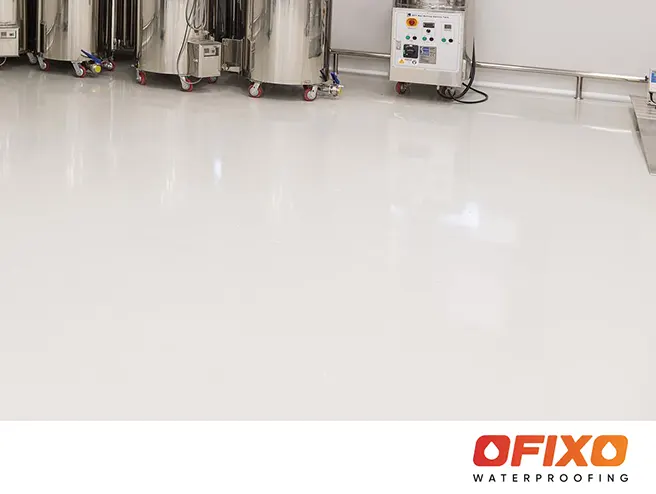
Built for Production Environments
What is Industrial Epoxy?
Industrial epoxy flooring is the family of high-build, heavy-duty coating systems engineered for the operational realities of factories, warehouses, and manufacturing plants – forklift traffic, point loads from pallet racking and machinery, chemical and oil exposure, frequent washdown, and aggressive cleaning regimes. Build thickness ranges from 2mm self-levellers up to 9mm trowel-applied polymer mortar systems, formulated solvent-free for safe application in operational environments.
Distinct from commercial epoxy systems (the same coating family but engineered for lighter foot traffic and aesthetic focus): industrial systems are spec’d by performance. Engineers and FM teams write tender documents in terms of MPa compressive strength, mm/year abrasion loss, chemical resistance grade, and minimum cure-to-traffic times. Sika Sikafloor, Fosroc Nitoflor, BASF MasterTop, Mapei Mapefloor – manufacturer-grade systems applied by manufacturer-trained crews, with batch records and warranty documentation at handover.
The Operational Case
Four Performance Drivers Industrial Buyers Specify.
Industrial epoxy isn’t bought for the look – it’s bought because four specific operational demands can’t be met by bare concrete, paint, or tile. These are the demands that put epoxy on the spec sheet.
Forklift & Heavy Vehicle Traffic
Bare concrete dusts and degrades under forklift traffic – wheel marks, surface aggregate exposure, and chronic dust generation. Industrial epoxy mortar systems (5–9mm) carry forklift wheel loads without surface degradation. Wheel loads up to 50 kN routine on heavy-duty specifications.
Chemical & Oil Resistance
Manufacturing floors face oils, hydraulic fluids, solvents, acids, alkalis, and cleaning chemicals. Epoxy creates a chemically inert barrier that protects concrete from absorption and degradation. Resistance grade specified per actual chemical exposure (BS EN 13529).
Frequent Washdown & Cleaning
Food, beverage, and pharmaceutical production floors are washed down daily – sometimes hourly. Concrete absorbs water and contaminants; epoxy stays sealed. Coved skirtings and integral drains complete the hygienic envelope for HACCP / FDA / GMP compliance.
Lifecycle Cost Advantage
Industrial epoxy floors deliver 15–20 year service life vs concrete dusting requiring constant management, or tile cracking under heavy traffic. Capital cost recovered within 3–5 years on operational floors through avoided downtime, reduced cleaning costs, and lower replacement frequency.
Technical Breadth
Four Distinct Industrial Epoxy Systems.
Industrial epoxy isn’t one product – it’s four distinct system types matched to traffic intensity, substrate condition, chemical exposure, and surface profile requirements. Specified per the operational reality of the floor.
Solvent-Free Heavy-Duty Epoxy
High-build solvent-free epoxy applied in multiple roller coats – chemical resistance, abrasion resistance, easy cleaning. The default specification for medium-traffic industrial floors (light forklifts, foot traffic, occasional vehicle loads).
Self-Levelling Epoxy
Free-flowing epoxy systems that self-level to flat under gravity – eliminating substrate undulation and delivering perfect flatness for clean rooms, laboratories, and finished-floor-critical environments.
Polymer Mortar (Trowel-Applied)
Trowel-applied polymer mortar systems with aggregate-filled body – the heaviest-duty industrial floors. Handles continuous forklift traffic, point loads from racking and machinery, chemical exposure, and aggressive cleaning regimes.
Anti-Slip Broadcast
Silica, aluminium oxide, or quartz aggregate broadcast into wet epoxy and topcoated – delivering certified slip-resistance to BS 7976 or ASTM D2047. Critical for wet processing, washdown areas, and any environment with slip-hazard exposure.
Industry-Specific Specifications
Five Industries. Five Different Spec Requirements.
Industrial epoxy isn’t a one-size-fits-all conversation. Each industry brings its own performance demands, certifications, and compliance requirements. This is how we scope each one.
Food Production & Beverage
Key Demands
HygieneFDA / HACCP certificationFrequent washdown
Typical Specification
Self-levelling food-grade epoxy (3–6mm), coved skirtings to walls, integral floor drains, anti-microbial additive, anti-slip topcoat in wet areas. Anti-bacterial certification per ISO 22196.
Typical Projects
Dairy production, beverage bottling, food packaging, central kitchens, halal meat processing.
Automotive Manufacturing & Service
Key Demands
Heavy machinery loadsOil / chemical resistanceVehicle traffic
Typical Specification
Polymer mortar (5–9mm) in workshop bays, solvent-free body coats in assembly. Oil-resistance grade. Coloured zoning for traffic management. Anti-slip aggregate in oily areas.
Typical Projects
Workshops, service bays, assembly lines, tyre fitting, body shops, dealership service areas.
Pharma & Clean Rooms
Key Demands
GMP complianceISO class clean roomsStatic control
Typical Specification
Self-levelling epoxy (3–4mm) for ISO Class 5–8 clean rooms, anti-static or conductive systems for static-controlled areas, certified low VOC for clean room compliance, coved details.
Typical Projects
Pharma production, sterile filling, dispensing, lab spaces, GMP packaging, ISO clean room facilities.
Warehousing & Logistics
Key Demands
Forklift trafficPallet rack point loadsAisle marking
Typical Specification
Solvent-free heavy-duty epoxy (2–4mm) or polymer mortar (5–9mm) in heavy-traffic zones. Coloured line marking for aisles, racking footprints, safety zones. UV-stable topcoat near loading docks.
Typical Projects
Distribution centres, 3PL warehouses, cold storage, freight forwarding facilities, e-commerce fulfilment.
Chemical Manufacturing
Key Demands
Aggressive chemical resistanceSpill containmentAnti-corrosive
Typical Specification
Polymer mortar (5–9mm) or specialist chemical-resistant epoxy (novolac for severe exposure), bunded areas with coved skirtings, integrated drainage to chemical-resistant gulleys. Resistance graded per actual exposure profile.
Typical Projects
Chemical manufacturing, plating shops, batch processing, paint shops, electroplating, water treatment.
Not sure which spec applies to your environment? Our floor surveyors visit on-site and write a recommended specification based on actual operational conditions – chemical exposure, traffic intensity, cleaning regime, regulatory requirements. No charge before contract.
Step by Step
Our 6-Step Industrial Epoxy Installation Process.
Industrial environments demand programme discipline – work around operational shifts, contain dust and odour, hit handover windows. Our process is built for those constraints.
-
01
Site Survey & Specification
Floor surveyor visits during operational hours – assesses substrate, identifies traffic patterns and chemical exposure zones, reviews FM requirements. Specification written per actual conditions, not assumed conditions. Cost-engineered alternatives offered where appropriate.
-
02
Programme & Phasing
Phased installation programme agreed with operations team – working around production shifts, isolated sections to maintain throughput where possible, weekend or shutdown windows for full closures. FM team briefed on dust, odour, and access protocols.
-
03
Substrate Preparation
Industrial diamond grinding or shot-blasting to remove laitance, contamination, oil, and existing coatings. Substrate moisture testing (must be <4% before coating). Crack and pit repair using epoxy mortar. Surface profile CSP-3 to CSP-5 per system.
-
04
Primer & Body Coats
Two-component epoxy primer applied to prepared substrate. Body coats per system spec – roller-applied for solvent-free systems, self-levelling pour for SL systems, trowel-applied for polymer mortar. Multiple coats with manufacturer-specified cure between each.
-
05
Anti-Slip / Aggregate / Topcoat
System-specific finish work – aggregate broadcast for anti-slip, second body coat for self-levellers, polymer mortar trowelling for heavy-duty, conductive topcoat for ESD. Coloured zoning and line marking applied during topcoat stage.
-
06
Cure, Handover & Documentation
Full 7-day cure before heavy industrial traffic; 24–72 hour cure for lighter use. Handover pack: batch records, datasheets, installation logs, photographs, pull-off bond test results, manufacturer warranty paperwork. Asset register ready.
Why Ofixotech
Six Reasons Factory and Warehouse Operators Specify Ofixotech.
Industrial flooring projects fail when contractors don’t understand operational constraints. Here’s why factory, warehouse, and manufacturing buyers across Dubai work with us.
Operational Programme Discipline
We schedule around production – overnight shifts, weekend installations, phased rollouts, isolated zone closures. The industrial buyer’s biggest fear is downtime, and our delivery model is built around minimising it.
Heavy-Duty System Expertise
Polymer mortar systems (5–9mm) are a specialist skill – trowel finishing, aggregate distribution, cure management. Our installer crews are trained on the heavy-end systems most general contractors avoid.
Manufacturer Partnerships
Sika Sikafloor, Fosroc Nitoflor, BASF MasterTop, Mapei Mapefloor – direct manufacturer relationships with technical support, batch records, and warranty backing. Manufacturer-certified installers on critical specifications.
Moisture & Humidity Discipline
Substrate moisture testing on every project, ambient humidity monitoring, surface temperature verification before every coat. The single most common cause of epoxy failure – and the variable we obsess over.
Documentation & FM Records
Industrial FM teams need paper trails – batch records, daily QC logs, pull-off bond test results, photographs, datasheets, warranty paperwork. Compliance pack assembled at handover, asset register ready.
Documented Warranty
Manufacturer product warranty (typically 10–25 years on cured industrial epoxy systems) plus our written workmanship guarantee (typically 2 years on installation). Combined warranty pack at handover.
Factory, Warehouse, or Plant Floor Project?
Free industrial floor survey – we'll visit during operational hours, assess substrate and traffic, recommend the right system, and quote with phased programme integrated to your shutdowns.
or WhatsApp +971 55 770 5568
Answered
Industrial Epoxy Flooring FAQs.
The questions factory managers, warehouse operators, and industrial FM teams ask most about industrial epoxy flooring in Dubai and the UAE.
Which industrial epoxy system do I need?
Determined by traffic intensity, chemical exposure, and finish requirements. Light-to-medium industrial floors (assembly, packing, light forklifts): solvent-free heavy-duty 2-4mm. Flatness-critical environments (clean rooms, labs, electronics): self-levelling 3-6mm. Heavy machinery, aggressive forklift traffic, chemical processing: polymer mortar 5-9mm. Wet processing or washdown areas: anti-slip aggregate broadcast on top of any system. We specify after on-site survey; not a desktop decision.
Can you install epoxy without stopping production?
Often yes, with phased programming. Most industrial floors get installed in sections – isolated zones taken out of operation while adjacent zones continue working. Overnight shifts (12-hour windows) and weekend shutdowns are common. Full closures only required for very large continuous areas or specialty systems. Programme agreed with operations team at quote stage; FM coordinator typically assigned for the duration.
How long does industrial epoxy take to cure?
System-dependent. Foot traffic: 24 hours. Light vehicle traffic: 72 hours. Forklift and heavy industrial traffic: 7 days. Aggressive chemical exposure: 7-10 days for full chemical resistance. Cure times accelerate at higher temperatures (typical Dubai ambient gives standard cure profile). We provide method statements with specific cure-to-traffic windows for your programme planning.
What’s the typical service life?
Industrial epoxy properly installed on sound substrate: 15-20 years in moderate industrial use, 10-15 years in heavy industrial use. Polymer mortar systems (5-9mm) often last 20+ years. Service life is determined more by maintenance and impact damage than by the epoxy chemistry. We provide expected service-life ranges per system at quote stage.
Do you handle FDA / HACCP / GMP compliance?
Yes – food-grade and pharmaceutical specifications are routine for us. We use FDA-compliant epoxy systems from Sika, BASF, and Mapei, with full datasheets and certification at handover. Coved skirtings (50-150mm), integral drains, anti-microbial additives, and ISO 22196 anti-bacterial certification available where specified. Method statements aligned to HACCP / GMP audit requirements.
What if my substrate isn’t sound?
Then it needs Concrete Resurfacing or Concrete Restoration before epoxy goes down. Industrial epoxy assumes sound concrete substrate. If the floor is worn, pitted, spalled, or uneven, we’ll flag that at survey stage and quote a combined scope: substrate renewal first, then epoxy. We deliver both, sequentially, with the right specification per condition. See our Concrete Resurfacing page for substrate renewal scope.
Can you do coloured zoning, line marking, and safety markings?
Yes – coloured zoning for traffic management (forklift aisles, pedestrian zones, racking footprints, hazardous areas) and safety markings (line markings, hatching, directional arrows) are routinely integrated into industrial epoxy projects. Applied during the topcoat stage so markings are embedded in the system, not surface-painted. Specifications agreed with operations and EHS team before installation.
What warranty do you provide?
Manufacturer product warranty: typically 10-25 years on cured industrial epoxy systems from Sika, Fosroc, BASF, Mapei (period depends on system and exposure). Our written workmanship guarantee: typically 2 years on installation. Combined warranty pack at handover: batch records, datasheets, daily QC logs, pull-off bond test results, photographs, manufacturer paperwork. Compliance-ready for FM asset register and any audit.