
Structural Crack Specialists · Dubai & UAE
Concrete Crack Repair – Epoxy Injection for Structural Crack Restoration.
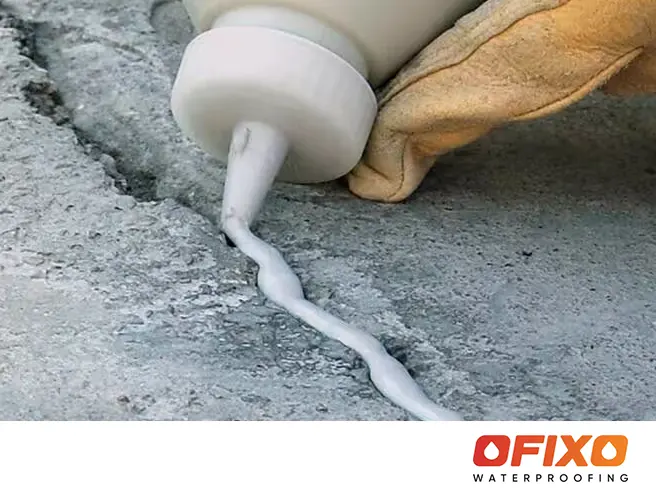
Specialist structural crack repair across Dubai – epoxy resin injection that restores monolithic structural behaviour to cracked concrete elements. For load-bearing beams, columns, walls, and slabs where the crack threatens structural integrity (not waterproofing). Diagnostic-led: we identify crack TYPE first, then specify the right repair sequence for each.
- Epoxy-grade restoration
- 6 crack types
- ICRI methodology
Structural, Not Waterproofing
What is Concrete Crack Repair?
Concrete crack repair is the structural restoration of cracked concrete elements – beams, columns, slabs, walls, and structural floors – using epoxy resin injection, V-groove and patch repair, or hybrid approaches. The goal is RESTORING MONOLITHIC structural behaviour: bonding the crack faces back together so the element behaves as a single piece under load.
Distinct from waterproofing-focused injection (Live Leakage Injection and PU Injection): those services stop active water flow using flexible polyurethane resins. THIS service uses rigid epoxy resins to restore structural integrity. Same general technique (drilled ports, pressure injection); fundamentally different chemistry, purpose, and outcome. Different cracks need different chemistries – diagnostic comes first.
Why It Matters
Why Cracks Aren’t Just Cosmetic.
A crack in a load-bearing concrete element isn’t a finish defect – it’s a structural breakdown. Here’s what happens if untreated.
Lost Structural Capacity
A cracked beam or column no longer behaves as a single monolithic element – load is no longer transferred efficiently across the crack. Even hairline structural cracks can reduce design capacity by 20–40%.
Cracks Grow Under Load
Untreated structural cracks propagate. Each load cycle (traffic, wind, thermal expansion) extends the crack a little further. What starts as 0.1mm hairline becomes a 1mm structural fault within years.
Cracks Are Highways for Water
Cracks let chloride-laden water reach the rebar, accelerating corrosion that drives further concrete damage. Crack repair isn’t ONLY structural – it also blocks the next stage of failure.
Safety & Liability
Cracked load-bearing members are a documented safety risk. Owners and FM teams have legal obligations under Dubai Municipality structural standards to address known structural defects within reasonable timeframes.
Diagnostic Classification
Not Every Crack Is the Same Crack.
Diagnosing the crack TYPE determines the repair specification. The wrong treatment on the wrong crack type fails fast – and stays failed.
Structural Cracks
Cracks caused by structural overload, design deficiency, or impact damage. Typically follow predictable lines (mid-span of beams, tension faces, around penetrations).
REPAIR: Full epoxy pressure injection to restore monolithic behaviour, often paired with CFRP strengthening for ongoing capacity.
Shrinkage Cracks
Drying shrinkage cracks appearing within months of casting – usually shallow, random pattern, not following structural lines.
REPAIR: Surface sealing with low-viscosity epoxy for cosmetic restoration. If shrinkage cracks reach the rebar, epoxy injection prevents future corrosion.
Thermal Movement Cracks
Cracks at predictable locations from daily/seasonal thermal expansion – parapets, roof slabs, exposed elements.
REPAIR: These cracks need FLEXIBLE sealants, not rigid epoxy. We refer to expansion joint waterproofing for ongoing movement tolerance.
Settlement Cracks
Cracks from differential foundation settlement – typically diagonal, often near corners or openings.
REPAIR: DIAGNOSE first – if settlement is ongoing, epoxy injection just cracks again. Stabilise the foundation first, then repair the visible damage.
Corrosion-Induced Cracks
Cracks along rebar lines, often with rust staining, caused by chloride or carbonation-driven rebar corrosion expanding inside the concrete.
REPAIR: This is spalling repair territory – chip back, treat rebar, reinstate with polymer mortar. Crack injection alone misses the cause.
Map / Pattern Cracking
Network of fine surface cracks across a wide area – alkali-silica reaction (ASR), carbonation, or surface treatment failure.
REPAIR: Surface sealing with anti-carbonation coating; structural injection rarely required. Diagnostic testing identifies the root cause.
The Technical Decision
Same Technique. Different Chemistry. Different Outcomes.
Epoxy and polyurethane injection look identical from outside – drilled ports, pressure pump, resin flowing into the crack. They’re fundamentally different services and you specify them for different reasons. Here’s the decision.
Epoxy Resin
Concrete Crack Repair
Rigid · Structural · This Page
Two-component epoxy reacts to form a high-strength rigid bond – tensile strength typically exceeds the concrete itself. Restores monolithic structural behaviour across the crack so the element transfers load as a single piece.
USE WHEN
- Load-bearing beams, columns, walls with structural cracks
- Restoring monolithic behaviour to cracked elements
- Dry or near-dry substrates only
- When the goal is STRUCTURAL, not water-stop
Polyurethane Resin
PU Injection / Live Leakage Injection
Flexible · Water Stop · Different Service
PU reacts with water on contact, forming either a flexible swelling gel (hydrophilic) or a rigid foam (hydrophobic). Designed to STOP WATER, not restore structural integrity. Works on damp or actively-leaking substrates where epoxy can’t bond.
USE WHEN
- Active water leaks through cracks
- Basement walls, lift pits, water tanks
- Damp or actively wet substrates
- When the goal is WATER STOP, not structural
If your concern is structural integrity → epoxy injection (this page). If your concern is stopping water → PU injection (see waterproofing services). Same equipment; different specifications.
Step by Step
Our 6-Step Structural Crack Repair Process.
Every project follows the same disciplined sequence – adjusted for crack type, substrate, and structural context per project.
-
01
Crack Mapping & Classification
Walk the structure, map every crack, classify by type (structural, shrinkage, thermal, settlement, corrosion, map). Photograph for project record. Identify monitoring needs for active or growing cracks.
-
02
Substrate & Moisture Check
Confirm substrate is dry enough for epoxy injection (moisture meter readings). If wet, treat moisture source first OR specify alternative repair approach. Don’t injection-into-wet-substrate; epoxy won’t bond.
-
03
Surface Sealing
Apply quick-set epoxy paste to seal the crack face – creates pressure containment for the injection. Install injection ports along the crack at 200–300mm spacing.
-
04
Pressure Injection
Pump two-component epoxy via low-pressure injection (typically 15–60 bar for structural epoxy – lower than PU). Watch for resin emergence at adjacent ports – confirms continuous fill across the crack.
-
05
Cure & Surface Removal
Allow 24–48 hour cure to design strength. Remove injection ports and grind off surface paste. Repaired crack is now bonded; the structural element behaves as a single piece again.
-
06
Witness Testing & Handover
Visual inspection of all repaired areas. Core sampling on critical structural repairs to verify bond depth (per engineer’s specification). Documented handover with method statements, materials datasheets, and warranty paperwork.
Why Ofixotech
Six Reasons Engineers Specify Ofixotech.
Crack repair done right requires diagnostic skill before drilling – knowing WHICH crack type you have determines whether the repair lasts 30 years or fails in 30 weeks.
Diagnostic First
We classify the crack type and identify the root cause before specifying any repair. The most common cause of failed crack repair is wrong-treatment-for-the-crack-type.
Both Chemistries In-House
Epoxy AND polyurethane resins carried. We can deliver structural epoxy repair, water-stop PU injection, or hybrid scope – without subcontracting between specialists.
Structural Engineering Partnership
For load-bearing structural crack work, we operate alongside your structural consultant – they own the design, we execute. Clear scope separation for critical work.
Specialist Injection Equipment
Two-component low-pressure injection pumps calibrated for structural epoxy work. The kit most general contractors don’t own – and the calibration matters for bond integrity.
Manufacturer-Grade Products
Sika, Fosroc, BASF Master Builders Solutions, Mapei – manufacturer-backed product systems with documented warranties and technical datasheets for tender submissions.
Documented Warranty
Manufacturer product warranty (typically 10+ years on cured epoxy) plus our written workmanship guarantee – documented at handover for FM records and insurance.
Structural Cracks That Won't Wait?
Book a free crack inspection – we'll classify the crack type, identify the cause, and quote the right repair sequence within 48 hours.
or WhatsApp +971 55 770 5568
Answered
Concrete Crack Repair FAQs.
The questions Dubai facility managers, structural consultants, and building owners ask most about structural crack repair.
What’s the difference between this and PU injection?
Chemistry and purpose. Concrete crack repair uses RIGID epoxy resin to restore structural monolithic behaviour – the goal is making the cracked element behave as one piece again. PU injection (Live Leakage Injection / PU Injection) uses FLEXIBLE polyurethane resin to STOP WATER – the goal is sealing the crack against water ingress, not structural restoration. Different chemistries, different specifications, different services. We do both, but we don’t substitute one for the other.
My beam has a crack – is it serious?
Depends on the crack TYPE, location, and the loading on the element. Structural cracks (following predictable lines in load-bearing elements) are serious and need urgent investigation. Pattern/map cracks across a wide surface area are typically less critical structurally. Settlement cracks need foundation investigation first. A free crack inspection identifies which category your crack falls into – we don’t recommend repair until we know what we’re treating.
Can you repair cracks while the building is occupied?
Yes – most crack repair work happens in live buildings. The work itself is low-disruption: small drilling for ports (handheld drill, manageable noise/dust), pump injection (quiet), 24–48 hour cure (no occupant impact). We coordinate access windows with FM teams. Major structural repairs may need temporary load relief, in which case the structural consultant specifies the temporary works.
What’s the cost of crack repair?
Highly variable – depends on crack length, accessibility, structural significance, and number of separate cracks. A small hairline crack in an accessible basement wall might be a few thousand dirhams; a major structural crack across a tower beam might be 5-6 figures including scaffolding and engineer oversight. We quote per project after a free inspection – no standard rate.
How long does an epoxy injection job take?
Single small structural crack: typically 1–2 days including cure. Multiple cracks across a beam or column: 3–5 days. Full structural element with many cracks: up to 2 weeks. The actual injection itself is fast; the cure time (24–48 hours to design strength) is the timeline driver. We coordinate with main contractors on programme integration.
Do you handle CFRP strengthening on the same project?
Yes – for severely damaged structural elements, crack repair is often the first phase, followed by CFRP (carbon fibre) strengthening to restore or upgrade structural capacity. Same in-house team for both scopes. CFRP design comes from the structural consultant; we execute per their specification.
What if the crack is from active settlement?
Then crack injection alone won’t last – the foundation will continue moving and the same crack will reappear. We diagnose settlement vs structural cracks during the inspection. If settlement is the cause, we recommend foundation stabilisation (often through coordination with a geotechnical specialist) before specifying the visible crack repair.
What warranty do you provide?
Manufacturer product warranties (typically 10+ years on cured epoxy systems from Sika, Fosroc, BASF, Mapei) plus our written workmanship guarantee (typically 1–2 years on the installation). Combined warranty pack delivered at handover with method statements, materials datasheets, and as-built photographs for the asset register and any insurance requirements.
Epoxy Injection. Structural Restoration. Documented.
Book a free crack inspection – our specialist will classify the crack type, identify the cause, and recommend the right repair sequence (epoxy injection, V-groove repair, hybrid scope, or referral to PU injection where appropriate). Quote within 48 hours.
or WhatsApp +971 55 770 5568