
Villa & Heritage Specialists · Dubai & UAE
Foundation Underpinning – Adding Capacity, Correcting Settlement, Securing the Substructure.
Specialist foundation underpinning across Dubai – engineered substructural intervention for villas, heritage buildings, commercial conversions, and refurbishment projects where the original foundation needs more capacity, has settled differentially, or sits in the path of new construction. Four method options, occupied-building delivery, and a discreet site presence that respects what’s standing above.
- 4 underpinning methods
- Occupied-building delivery
- Heritage-grade discretion
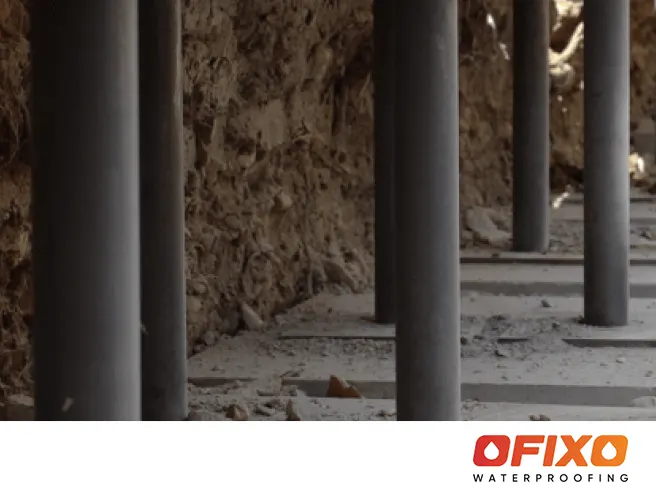
Sub-Structural Intervention
What is Foundation Underpinning?
Foundation underpinning is the engineered transfer of building loads onto deeper, stronger, or larger bearing strata than the original foundation provides. The intervention happens below the existing foundation – through new mini-piles installed underneath, mass concrete extensions cast in sequence, jet-grouted soil columns, or chemical resin injection of the soil itself. The building above stays in place; the substructure changes underneath it.
Underpinning enters scope when the original foundation can’t handle what’s coming next – a villa extension adding storeys, a change of use bringing heavier loading, differential settlement causing cracks, or adjacent excavation undermining bearing capacity. Most underpinning in Dubai is on villas, heritage buildings, and small-to-mid commercial conversions where the structure above is valuable and demolition isn’t viable. Engineered by geotechnical and structural consultants; executed by our specialist team with method-statement discipline and settlement monitoring throughout.
The Triggers
Four Reasons Underpinning Enters the Specification.
Underpinning is rarely the first thought – but for these four scenarios, it’s the only structural answer. Each maps to a different underpinning method depending on substrate and access.
Differential Settlement
Building has settled unevenly – corner of villa dropping faster than the rest, cracks appearing diagonally on walls, doors becoming hard to close. Sand subsiding under one part of the foundation while the other holds. Underpinning restores level bearing across the full footprint.
Change of Use · Heavier Loading
Building converted to a use that exceeds the original foundation’s design capacity – villa repurposed as a clinic, two-storey extension being added to a single-storey house, residential becoming light commercial. New use loads exceed bearing capacity; underpinning adds the capacity.
Adjacent Excavation Protection
New construction next door is excavating below your foundation’s bearing level – undermining lateral support and triggering settlement risk. Underpinning extends your foundation down to or below the neighbour’s excavation level before they dig. Defensive intervention.
Heritage Building Preservation
Heritage villa or older property where the foundation has aged, the soil has weathered, or the structure needs preserving against the next 50 years of UAE climate cycling. Underpinning extends service life without disturbing the irreplaceable structure above.
Technical Breadth
Four Distinct Underpinning Methods.
Underpinning isn’t one technique – it’s four distinct methods, each suited to different substrate conditions, access constraints, and load transfer requirements. The geotechnical consultant’s report determines which one applies.
Method 1 · 150–300mm Dia · To Bearing Strata
Mini-Pile Underpinning
Small-diameter piles (typically 150–300mm) installed through or alongside the existing foundation down to a deeper competent stratum. Pile head connected to the original foundation via a reinforced concrete cap – transferring loads from the old foundation onto the new piles. The default underpinning method for most Dubai villa and heritage work.
Method 2 · Traditional · Sequenced Bays
Mass Concrete Underpinning
Sequential excavation and concrete placement directly beneath the existing foundation – working in small bays (typically 900–1200mm wide) to maintain support of the structure above at all times. The classical underpinning technique; suited to shallow bearing-strata corrections and ground-floor villa work.
Method 3 · High-Pressure · In-Situ Soil Mixing
Jet Grouting
High-pressure cement grout jetted into the soil at calculated geometry – mixing with native soil to create columns of cement-soil composite material below the existing foundation. Used for soil improvement and load transfer where conventional piling isn’t viable due to access or substrate conditions.
Method 4 · Chemical · Expansive Polymer
Resin Injection
Targeted injection of expansive polymer resin into the bearing soil through small-diameter (12–15mm) tubes – the resin expands as it cures, compacting and consolidating the soil to increase bearing capacity. Minimally invasive method for settlement correction without major excavation.
How It Works In Practice
Four Project Scenarios We Deliver in Dubai.
Underpinning is project-specific work – the trigger, diagnosis, method, and outcome look different on each scope. Here are the four scenario patterns most common across our Dubai villa, heritage, and commercial portfolio.
Heritage Villa Settlement Correction
📍 Typical Dubai location: Jumeirah / Umm Suqeim / Al Wasl
Villa Extension – Load Increase
📍 Typical: Al Barsha / The Springs / Arabian Ranches
Adjacent Excavation Protection
📍 Typical: Urban infill plots in Deira / Karama / Bur Dubai
Change of Use – Residential to Commercial
📍 Typical: Older villas in Karama / Satwa being repositioned
Scenarios drawn from typical underpinning project patterns we deliver across Dubai. Real project details available under NDA at quote stage; references can be supplied directly to genuine prospects after initial site inspection.
Step by Step
Our 6-Step Underpinning Process.
Every underpinning project follows the same disciplined sequence – adjusted only for the method specified, the access constraints of the site, and the occupancy status of the building above.
-
01
Site Inspection & Geotechnical Coordination
Walk the building, identify cracks and settlement evidence, photograph and survey existing condition. Coordinate with geotechnical consultant for soil investigation and bearing-strata identification. Sets the diagnostic baseline.
-
02
Method Selection & Design
Geotechnical and structural consultants select method (mini-pile / mass concrete / jet grouting / resin injection) based on substrate report, access, and load demand. Underpinning scheme drawings produced. Pile / bay layout designed.
-
03
Settlement Monitoring Setup
Tilt meters and level survey points installed on the building before work starts – establishing baseline movement. Monitoring continues throughout execution; any unexpected movement triggers immediate intervention review.
-
04
Phased Execution
Method-specific execution in carefully phased bays or pile locations. Mass concrete: small-bay rule maintained at all times. Mini-piles: alternating-bay installation so the building never loses more than 25% of bearing simultaneously. Discipline matters.
-
05
Load Transfer & Connection
Once new foundation elements are in place and cured, load is transferred from old foundation to new via cap connection, pre-loading, or grout injection. The structure above gradually accepts its new support. Survey monitoring throughout transfer.
-
06
Backfill, Reinstatement & Handover
Excavations backfilled, finishes reinstated (floor finishes, plaster, landscape), monitoring records reviewed for stability. Handover documentation: geotechnical report, design drawings, installation records, settlement monitoring data, photographs, warranty pack.
Why Ofixotech
Six Reasons Villa Owners Choose Ofixotech.
Underpinning is delicate, project-specific work where the contractor’s discipline determines whether the building above stays intact. Here’s why villa owners, heritage refurbishment teams, and main contractors specify us.
Villa & Heritage Specialists
Track record across Jumeirah, Al Wasl, Umm Suqeim, and heritage areas of Dubai. We understand the working constraints of occupied villas – discreet hoarding, dust control, working hours that respect neighbours, careful reinstatement.
All 4 Methods In-House
Mini-piles, mass concrete, jet grouting, and resin injection – under one specialist team. The right method specified per project, executed without subcontracting handovers. Equipment owned, not hired.
Settlement Monitoring Discipline
Tilt meters and survey points on every project – baseline before work, continuous during execution, post-completion monitoring. Documented evidence the structure stayed within tolerance throughout.
Geotechnical Coordination
We work alongside geotechnical and structural consultants – site investigation, substrate testing, design drawings, calculations all coordinated. Clear scope separation between design and execution liability.
BS EN 14679 & ICE Standards
BS EN 14679 (execution of special geotechnical works – deep mixing), ICE Specification for Piling and Embedded Retaining Walls, and Dubai Municipality requirements applied throughout. Method statements aligned to standards.
Documented Warranty
Manufacturer product warranties on resin systems, structural epoxies, and concrete admixtures plus our written workmanship guarantee. Combined warranty pack at handover with full settlement monitoring data.
Settlement, Extension, or Foundation Concern?
Free site inspection – we'll walk the building, photograph existing condition, recommend the right method, and quote within the week. Discreet, occupied-building delivery.
or WhatsApp +971 55 770 5568
Answered
Foundation Underpinning FAQs.
The questions villa owners, heritage refurbishment teams, and main contractors ask most about foundation underpinning in Dubai.
I have cracks in my villa walls – do I need underpinning?
Not always. Cracks in villa walls have multiple causes: thermal movement (expansion/contraction with temperature), plaster shrinkage, minor settlement that’s already stabilised, or active differential settlement requiring underpinning. The diagnostic is: are the cracks getting worse over time, are they diagonal (a settlement signature), are doors and windows starting to bind? If yes to any, a site inspection plus crack monitoring over a few weeks will tell you whether underpinning is the answer. Often it’s not – and we’ll tell you that honestly rather than recommending unnecessary scope.
Which underpinning method is right for my villa?
Determined by site conditions: soil type at depth, water table level, access constraints, building age, and load requirements. Quick rule-of-thumb: Mini-piles are the default for most Dubai villa work – moderate to deep bearing strata, modest equipment footprint. Mass concrete suits very shallow corrections in stable soils. Jet grouting handles tight access. Resin injection is the minimally-disruptive option for occupied buildings with localised settlement. We specify after the geotechnical investigation, not before.
Can I stay in my villa during underpinning?
Usually yes. The vast majority of underpinning happens on occupied villas – we work in phased sections with hoarding around active work zones, dust control, and respect for normal living hours. Some methods (resin injection) are particularly low-impact. Some scenarios (full-perimeter mass concrete in a small villa) may require temporary relocation of bedrooms or main living spaces. We discuss this honestly at survey stage so families can plan.
How long does villa underpinning take?
Highly variable. Small-scale resin injection: 1-2 weeks. Mini-pile underpinning of a villa corner (4-6 piles): 3-5 weeks. Full-perimeter mini-pile underpinning of a villa: 6-12 weeks. Mass concrete underpinning of a villa: 8-16 weeks. Adjacent excavation protection: 4-10 weeks. Geotechnical investigation typically precedes by 2-4 weeks. We provide phased programmes at quote stage; cure times are typically the timeline drivers.
Will underpinning damage my villa?
Not when done properly. Disciplined phasing ensures the building never loses more than 25% of its bearing simultaneously. Settlement monitoring (tilt meters, level survey points) tracks any movement in real time and triggers intervention if anything goes outside tolerance. Cosmetic finishes around excavations are reinstated to original condition at handover. The risk profile of underpinning done badly is real – which is why we operate to BS EN 14679 standards and document everything.
Do you handle the geotechnical investigation?
No – and you’d want a specialist geotechnical consultant doing it, not a contractor. The geotechnical investigation (boreholes, soil testing, water table assessment, bearing capacity analysis) carries design liability that should sit with a consultant. We coordinate with the geotechnical consultant, integrate their report into our method statement, and execute the design. If you don’t have a geotechnical consultant engaged, we can recommend Dubai-based practices we work with regularly.
What about heritage buildings – do you have experience?
Yes. We’ve worked on older villas across Jumeirah, Al Wasl, Umm Suqeim, and heritage areas of Bur Dubai, Deira, and Karama. Heritage work requires extra discipline: minimal vibration, no machinery that could disturb the structure, careful protection of original finishes, and respect for the heritage character. Resin injection and small-scale mini-piles are typically our methods of choice for heritage scopes – minimally invasive, no vibration, no structural disruption above ground.
What warranty do you provide?
Manufacturer product warranties on resin systems and structural epoxies (typically 10-25 years), our written workmanship guarantee on the installation (typically 2 years), and the full settlement monitoring record at handover. Combined warranty pack assembled with: geotechnical report, design drawings, our installation records, pile/bay logs, settlement monitoring data, photographs, manufacturer datasheets. Audit-ready for asset register, insurance, and any future structural assessment.