
Heavy-End Strengthening Specialists · Dubai
Steel Plate Bonding & Jacketing – Heavy-End Strengthening for High-Demand Capacity.
Specialist steel strengthening across Dubai – externally-bonded steel plates and full RC or structural steel jackets for beams, columns, and slabs where the design demand exceeds what externally-bonded FRP can deliver economically. The heavy-end option when capacity requirements push past CFRP’s economic range, when the strengthening is purely compressive, or when the project specification requires steel.
- 3 system types
- Plates · RC jackets · Steel jackets
- Engineer-aligned execution
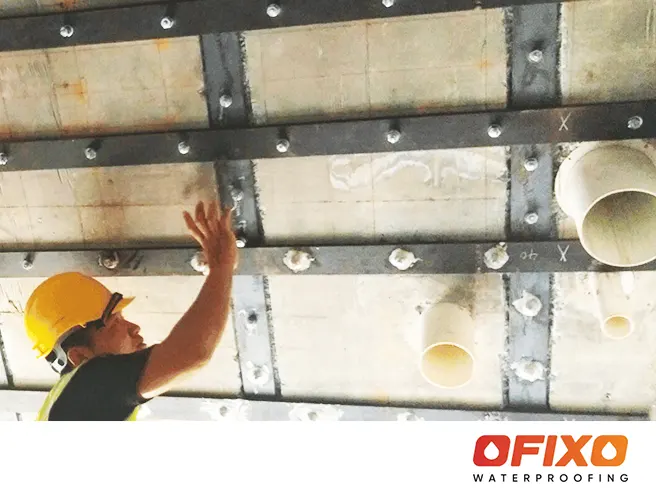
Heavy-End Structural Intervention
What is Steel Strengthening?
Steel plate bonding and jacketing is the family of strengthening techniques that uses structural steel – either as bonded plates on tension faces, as reinforced concrete jackets cast around existing members, or as full steel jackets welded around columns and beams – to add structural capacity beyond what externally-bonded FRP can deliver economically. Three distinct systems under one engineering banner.
Distinct from CFRP wrapping (our default for most strengthening scopes): steel is the heavy-end specification. It enters scope when capacity demand exceeds CFRP’s economic range, when the strengthening is purely compressive (column jackets), or when project-specific requirements favour steel – non-corrosive interior environments, cost-driven specifications, or consultant preference. We deliver both; the engineer’s calculation determines which system applies.
The Engineering Case
Four Reasons Steel Wins the Specification.
CFRP is the default – but for specific scenarios, steel plate bonding or jacketing is the engineered answer. Four drivers consultants cite when specifying steel over FRP.
Higher Modulus, Higher Capacity
Structural steel has roughly 5× the elastic modulus of CFRP. For applications requiring high stiffness addition – heavy industrial loading, machinery support, transfer beams – steel adds more capacity per unit area than carbon fibre.
Lower Cost Per Strength Unit
Steel is dramatically cheaper than CFRP on a per-tonne strength basis. Where cost optimisation drives the specification (large-area strengthening, infrastructure projects, public sector cost ceilings), steel becomes the economic choice.
Column Confinement & Compressive Capacity
RC jackets and structural steel jackets are the engineered answer when columns need significant compressive capacity addition. CFRP wraps provide confinement; jackets add cross-section and rebar. Different deliverables, different scopes.
Fire Resistance Without Topcoat
Steel has inherent fire performance superior to FRP. For unprotected fire scenarios or fire-rated members, steel plate bonding or jacketing can avoid the intumescent topcoats CFRP requires – simpler specification, lower lifecycle cost.
Technical Breadth
Three Distinct Steel Strengthening Systems.
Steel strengthening isn’t one technique – it’s three distinct systems with different applications, different economics, and different installation methodology. Engineers specify per the demand and the member configuration.
System 1 · External · Epoxy-Bonded · Beams/Slabs
Bonded Steel Plate Strengthening
Mild steel or structural-grade plates (typically 5–12mm thick) epoxy-bonded to the tension face of beams and slabs, often combined with mechanical anchors. Adds significant flexural capacity to existing members. The direct analogue to CFRP plate bonding but with steel’s higher modulus.
System 2 · Formed · Cast · Columns/Beams
RC Jacketing (Reinforced Concrete)
Reinforced concrete jacket cast around existing columns or beams – additional rebar tied to the existing member, formwork erected, jacket poured. Significant cross-section addition for compressive capacity, seismic confinement, or massive flexural upgrades.
System 3 · Welded · Mechanical · Columns
Structural Steel Jacketing
Structural steel angles or channels welded around existing columns, creating a steel jacket that takes axial load in concert with the original column. Less added thickness than RC jacketing; faster installation; pre-fabricated off-site where access allows.
The Technical Decision
Steel Is the Heavy-End Specification. Here’s When.
Both systems strengthen concrete; both use epoxy adhesives in some configurations. The decision between them comes down to four specific scenarios where steel’s properties win over CFRP’s economic and weight advantages.
Steel Strengthening
High capacity · Compressive · This page
Higher modulus than CFRP, dramatically lower cost per strength unit. The right answer when demand exceeds CFRP’s economic range, when compressive jackets are required, or when fire performance / cost drives the specification.
- Very high capacity addition required
- Compressive strengthening (column RC/steel jackets)
- Cost-driven specifications
- Non-corrosive interior environments
Carbon Fibre Wrapping
Lightweight · Corrosion-proof · Different service
Externally-bonded carbon fibre with 10× the tensile strength of steel at one-fifth the weight. The default Dubai strengthening specification when weight, corrosion exposure, or dimensional constraints favour FRP.
- Capacity addition without geometry change
- Corrosive exposure (coastal, marine)
- Seismic-sensitive structures
- Occupied buildings with access constraints
CFRP is the default specification on most projects. Steel enters scope when the four scenarios above apply. We deliver both; the consultant’s calculation determines which one wins for your specific design demand.
Step by Step
Our 6-Step Steel Strengthening Process.
Steel plate bonding, RC jacketing, and steel jacketing share the same execution sequence – adjusted only for the formwork and welding requirements of jacketed systems.
-
01
Design Coordination
Receive consultant’s design drawings, review plate sizes / jacket dimensions / anchor specifications. Provide constructability feedback before fabrication starts. Material specifications agreed (grade S275, S355, or as required).
-
02
Steel Fabrication
Off-site fabrication of plates (cut to size, edge prepared, drilled for anchors) or jacket angles/channels (welded sub-assemblies where access permits). Sandblasted and primed before delivery to site. Reduces on-site time.
-
03
Substrate Preparation
Mechanical preparation of concrete substrate – sandblasted or scarified per manufacturer adhesive spec. For jacketing: existing rebar exposed for dowel connections, surface roughened for bond. Hold point before installation.
-
04
Installation
Bonded plates: epoxy adhesive applied, plate positioned, anchor bolts drilled and grouted. RC jackets: rebar tied, formwork erected, concrete placed. Steel jackets: sections welded around column with grouted gap. Quality witness points throughout.
-
05
Cure & Inspection
Bonded plate cure: 7 days. RC jacket cure: 28 days. Steel jacket grout cure: 7 days. Inspections at hold points by consultant; ultrasonic testing on critical welds. Pull-off testing on bonded plates per specification.
-
06
Protection & Handover
Anti-corrosion coating to exposed steel surfaces (galvanising for harsh exposure). Fire-protective intumescent where rated. Full handover documentation: design drawings, fabrication records, weld test certificates, photographs, warranty pack.
Why Ofixotech
Six Reasons Engineers Specify Ofixotech for Steel.
Steel strengthening combines fabrication discipline, structural welding quality, adhesive expertise, and structural concrete works. The contractor’s discipline across all four determines whether the design performs.
Engineer-Aligned Workflow
We work alongside the consulting structural engineer – they own the design, we provide constructability input, fabricate to their drawings, and execute. Clear scope separation; design liability stays with the consultant.
Fabrication Partnerships
Direct relationships with structural steel fabricators in Sharjah and Ajman – quality-controlled fabrication, full material certificates, machined edges where bonding requires. Off-site work reduces site programme.
Structural Welding Capability
Certified structural welders for the steel jacketing scope. Welds tested per AWS D1.1 or BS EN 1090 as specified. Welding procedure specifications (WPS) submitted to consultant before work starts.
All 3 Systems In-House
Bonded plate strengthening, RC jacketing, and steel jacketing – under one specialist team. Project-managed across disciplines without subcontracting handovers between trades.
BS EN / AISC Compliance
BS EN 1090 (execution of steel structures), AISC 360 (structural steel buildings), and project-specific specifications applied throughout. Documented for audit and asset register.
Documented Warranty
Manufacturer adhesive warranties (typically 10–25 years on Sika / Fosroc / BASF structural epoxies), steel fabrication warranties, and our written workmanship guarantee. Combined warranty pack at handover.
Heavy Capacity Strengthening on Your Project?
Share the consultant's design – we'll review, propose fabrication scope, and quote within the week. Engineer-aligned execution from day 1.
or WhatsApp +971 55 770 5568
Answered
Steel Strengthening FAQs.
The questions consulting engineers, main contractors, and asset owners ask most about steel-based structural strengthening.
When should I specify steel over CFRP?
Specify steel when one of four scenarios applies: (1) capacity demand exceeds CFRP’s economic range – typically when you’d need 5+ layers of high-modulus CFRP fabric, (2) the strengthening is purely compressive (column RC jackets or steel jackets – CFRP only provides confinement), (3) the project is cost-driven and the environment is non-corrosive, or (4) fire performance without intumescent topcoats is required. For most other scenarios – facade, balconies, slabs, exposed beams – CFRP is the right call. See our CFRP Wrapping page for the alternative.
What’s the difference between RC jacketing and steel jacketing?
RC jacketing wraps the existing member in additional reinforced concrete – adds rebar tied to the original, formwork erected, concrete cast. Typical jacket thickness 150-300mm. Steel jacketing wraps the member in welded structural steel sections (angles or channels) with grouted gap to engage composite action. Typical added thickness 30-80mm. RC jackets add more capacity but more dimension; steel jackets are faster and dimensionally tighter. Engineer selects per the design demand and dimensional constraints.
Do you fabricate the steel in-house?
Steel fabrication is via established partnerships with structural fabricators in Sharjah and Ajman – quality-controlled, material-certified, with full chain of traceability. We project-manage the fabrication, witness key quality holds (cutting accuracy, edge preparation, welding), and own the on-site execution. The partnership approach gives clients quality fabrication without the overhead of a wholly-owned shop.
How is the bond verified for plate bonding?
Pull-off bond testing per the consultant’s specification – typically a minimum 1.4 N/mm² pull-off strength with cohesive failure (failure in the concrete substrate, not at the bond line). Tests conducted at quality hold points and witnessed by the consulting engineer where the specification requires. Results documented in handover pack.
What standards govern this work?
BS EN 1090 (execution of steel structures), AISC 360 (specification for structural steel buildings), AWS D1.1 (structural welding code – steel), and project-specific consultant specifications. Manufacturer datasheets for structural epoxy adhesives. Project-specific requirements from Dubai Municipality where they apply. We submit method statements aligned to these standards before work starts.
Can steel jacketing be installed in occupied buildings?
Yes, but with caveats. Steel jacketing on columns requires localised access – typically a few cubic meters around each column. We’ve delivered steel jacketing programmes in operational warehouses, parking decks, and live commercial buildings. RC jacketing is more disruptive due to formwork and concrete placement; planned phasing with FM teams handles this. Welding work requires fire-watch protocols in some occupancies.
How long does the work take?
Highly variable. Single beam plate-bonding job: 2-3 weeks including substrate prep and adhesive cure. Single column steel jacket: 3-5 weeks including fabrication, welding, and grouting. Single column RC jacket: 5-8 weeks including 28-day concrete cure. Multi-column programmes: 3-12 months depending on scope, access, and phasing. Programme integrated to your construction or refurbishment schedule.
What warranty do you provide?
Manufacturer adhesive warranties (typically 10-25 years on Sika / Fosroc / BASF structural epoxies), steel fabrication warranties from our fabrication partners, welding test certificates per AWS D1.1, and our written workmanship guarantee (typically 2 years on installation). Combined warranty pack at handover: design drawings, fabrication records, welding procedures, test certificates, photographs. Audit-ready for asset register and any future structural assessment.