
Long-Term Asset Protection · Dubai & UAE
Carbonation & Corrosion Protection – Preventive Coatings That Extend Concrete Service Life.
Strategic asset protection for Dubai high-rises, infrastructure, and concrete structures across the UAE. Not a reactive repair – this is the preventive scope that blocks CO₂ and chloride ingress, slows rebar corrosion, and extends building service life by decades. Specified by facility managers writing PPM schedules, structural consultants protecting newly-repaired elements, and asset owners managing long-term concrete liability.
- 4 Protection Systems
- 25+ Year Service Life
- Manufacturer Warranties
Preventive, Not Reactive
What is Concrete Protection?
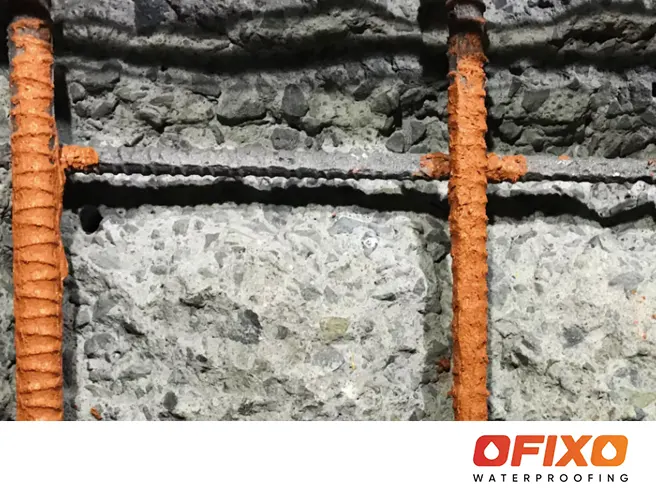
Carbonation & corrosion protection is the strategic, preventive application of barrier coatings, penetrating sealers, and corrosion-inhibiting systems to sound concrete – blocking the CO₂ and chloride ingress that drives rebar corrosion before damage starts. The goal isn’t to fix today’s failure; it’s to PREVENT tomorrow’s spalling repair.
Distinct from our active repair services (Concrete Crack Repair and Concrete Spalling Repair): those scopes fix existing damage. This scope buys you decades before the damage starts – or stops the next round from happening after a repair programme. The single highest-ROI scope in concrete restoration, and the one most under-specified in Dubai PPM schedules.
The B2B Case
Four Reasons Protection Pays Back.
Concrete protection is one of the highest-ROI scopes in building maintenance – yet routinely under-specified because it’s preventive, not visible. Here’s the financial case asset managers make.
5–10× Cost Multiplier
Protective coatings cost a fraction of remedial repair. A typical anti-carbonation coating spec runs 5–10× cheaper than the Stage 3–4 spalling repair it prevents – and protection scope can be planned for low-disruption application windows.
25+ Year Service Life Extension
Manufacturer-warranted protection systems extend concrete service life by 25 years on average – often the difference between a building reaching 40 years vs 65 years before major restoration becomes unavoidable.
Insurance & Asset Register
Documented protective coating programmes support insurance valuations, asset-register integrity, and structural condition reporting required by Dubai Municipality and JOP/owners associations. The paper trail matters.
PPM Schedule Integration
Protection scope can be planned into 5-yearly PPM cycles – predictable budget, planned access, no emergency mobilisation. The opposite of reactive repair which always arrives at the worst time.
Technical Breadth
Not One Coating. Four Distinct Systems.
Concrete protection isn’t a single product – it’s a portfolio of systems matched to the exposure, the substrate, the budget, and the asset’s lifecycle stage. We specify and apply all four.
Anti-Carbonation Coatings
CO₂ Barrier · Breathable
Polymer-based coatings (acrylic, silicate, or elastomeric) applied to exposed concrete surfaces. Blocks atmospheric CO₂ from reaching rebar depth while remaining vapour-permeable – so any existing moisture can escape rather than trap behind the coating.
When to specify: Default specification for facade protection, parking structures, and exposed structural elements.
Penetrating Sealers
Silane / Siloxane · Hydrophobic
Silane and siloxane-based water repellents that penetrate into the concrete pore structure and chemically bond to substrate – blocking chloride-laden water ingress through capillary action without forming a surface film.
When to specify: Specified for chloride-exposed elements: balconies, parking decks, coastal-facing facades, and substructures.
Migrating Corrosion Inhibitors
MCI · Rebar Protection
Penetrating liquid systems applied to concrete surfaces that diffuse through the cover concrete to reach embedded rebar – forming a protective monomolecular film on the steel surface that inhibits corrosion even when chlorides are present.
When to specify: Specified when chloride contamination is confirmed but spalling hasn’t started. Buys time and slows progression.
Cathodic Protection (CP)
Electrochemical · High-Value
Sacrificial anode or impressed current systems that actively prevent rebar corrosion through electrochemical means – making the rebar the cathode of an external circuit so corrosion cannot proceed at the steel surface.
When to specify: The premium scope for high-value structures: critical infrastructure, listed buildings, irreplaceable assets.
Strategic Timing
Four Lifecycle Moments to Specify Protection.
Protection isn’t a one-time decision – there are four distinct moments in a building’s life when this scope creates outsize value. The earlier in the lifecycle you specify, the cheaper and more disruption-free the application.
-
01
Phase 1
New Construction (Day 0)
Building Handover · Year 0Specifying protection from day 1 is the lowest-cost, highest-value moment. Substrate is pristine, no surface preparation needed, full scaffolding still on site. Often added as a developer-level upgrade for premium positioning.
PayoffBuilding reaches 65+ years before major restoration.
-
02
Phase 2
Mid-Life PPM Cycle
Years 10–20 · Planned Maintenance WindowStandard preventive maintenance window. Concrete is sound but exposure has been accumulating – carbonation has started reaching cover concrete, chloride contamination is measurable. Protection now resets the clock.
PayoffBuy back 20–25 years of concrete service life.
-
03
Phase 3
Post-Repair Protection
Immediately After Crack/Spalling RepairAfter active repair work (crack injection, spalling reinstatement) protective coating prevents recurrence in adjacent untreated concrete. Without it, the next round of damage appears within 5–10 years in nearby areas.
PayoffStops the repair cycle from repeating in 5–10 years.
-
04
Phase 4
Late-Life Extension
Years 25+ · Major InterventionAggressive intervention for buildings nearing end of original service life. Combined with structural assessment, this scope determines whether the building gets 15 more years vs requires major remediation – often a strategic asset decision.
PayoffDefer multi-million dirham restoration by 15+ years.
Phase 1 is the cheapest and most strategic. Phase 4 is the most expensive but still cheaper than not doing it. The middle phases are the standard PPM specification windows for Dubai high-rises.
Step by Step
Our 6-Step Protection Process.
Every project follows the same disciplined sequence – adjusted for the protection system specified, the substrate condition, and the access constraints of live building work.
-
01
Condition Survey
Walk the structure, photograph and map existing condition, identify any active damage that needs repair BEFORE protection (protection over failing concrete is wasted spend). Set baseline.
-
02
Diagnostic Testing
On-site testing: carbonation depth (phenolphthalein test), chloride content (concrete dust sampling), cover meter scanning. Identifies whether MCI or CP is justified vs basic anti-carbonation coating.
-
03
System Specification
Engineer the protection system per the diagnostic results, exposure environment, and asset lifecycle stage. Specify product systems, application rates, number of coats, and protective topcoat where applicable.
-
04
Substrate Preparation
Pressure-wash to remove laitance, dust, biological growth. Repair any active defects identified in step 1 (typically subcontracted from our crack/spalling repair scope or coordinated with another trade). Moisture verification.
-
05
System Application
Apply per manufacturer’s specification – typically 2 coats at controlled spread rates with cure between coats. Witness testing at quality hold points. Wet-film and dry-film thickness measurements documented per area.
-
06
Documentation Handover
Manufacturer datasheets, batch records, application records, wet/dry film measurements, photographs, warranty paperwork – assembled into handover pack for asset register, insurance, and JOP/owner records.
Why Ofixotech
Six Reasons Asset Owners Specify Ofixotech.
Protection scope is unforgiving on documentation – facility managers, insurers, and asset valuers all want the paper trail. Here’s how we deliver the scope AND the documentation.
Diagnostic Equipment
On-site testing kit – carbonation depth, chloride content, cover meter, half-cell potential. We specify the right system per actual substrate condition, not a generic ‘coat the building’ approach.
All 4 Systems Carried
Anti-carbonation coatings, penetrating sealers, MCIs, cathodic protection (specialist coordination) – full portfolio. We’re not pushing the one product we have; we’re specifying the right system for the asset.
Manufacturer Partnerships
Sika, Fosroc, BASF Master Builders Solutions, MCI Technologies, Mapei – direct manufacturer relationships for technical support, warranty coverage, and on-site quality witnessing.
PPM-Schedule Ready
Quotes, method statements, and programmes structured to fit into 5-yearly PPM cycles. We’ve delivered scopes integrated into multi-year asset maintenance plans across Dubai high-rises.
Documented Warranties
Combined manufacturer + workmanship warranty pack delivered at handover – datasheets, batch records, application logs, photographs, witness sign-offs. Audit-ready for insurance and asset register.
Live-Building Experience
Most protection work happens in occupied towers. We coordinate access, dust control, working windows, and tenant communications. Scaffolding, rope access, and BMU work all in-house or via established partnerships.
Planning Long-Term Asset Protection?
Free protection survey for high-rises, infrastructure, and concrete assets across Dubai. Diagnostic testing, system specification, and a written quote integrated to your PPM cycle.
or WhatsApp +971557705568
Answered
Carbonation & Corrosion Protection FAQs.
The questions Dubai facility managers, asset owners, and structural consultants ask most about preventive concrete protection.
How is this different from your repair services?
Different scope and purpose. Concrete Crack Repair and Spalling Repair fix existing visible damage – concrete that has already failed. Protection scope (this service) blocks the ingress of CO₂ and chlorides that CAUSES damage, applied to sound concrete or as a follow-on after repair work. Preventive vs reactive. We do both, sequentially: repair first if damage is present, then apply protection across the whole element to prevent recurrence. Many of our largest projects are protection-only – applied to buildings that don’t yet show damage but are entering the at-risk age window.
What’s the typical specification for a Dubai high-rise facade?
For a typical 20-year-old Dubai tower with no major visible spalling: condition survey + carbonation depth and chloride content testing + anti-carbonation coating system (2 coats) applied across all exposed concrete + penetrating sealer on chloride-exposed elements (balconies, parking decks). Total scope typically 6-12 weeks depending on facade complexity and access constraints. We provide a written specification per project.
Will protection coatings change the appearance of the building?
Anti-carbonation coatings are available in pigmented finishes – colour-matched to existing facade aesthetics. Many systems are designed as both protection AND decorative finish (refreshing facade appearance while protecting). Penetrating sealers are clear/invisible by design. Cathodic protection has no visual impact. We provide colour options at specification stage.
What’s the lifecycle of the protection system itself?
Manufacturer-warranted product lifecycles: anti-carbonation coatings 15-25 years (premium elastomeric systems toward the longer end); penetrating sealers 10-15 years (re-application schedule built into PPM); MCIs single-application gives 15-20 years of protection; cathodic protection 20-30 years with anode replacement cycle. We provide documented lifecycle expectations per project.
Can this be integrated into our PPM contract?
Yes – protection scope fits naturally into 5-yearly PPM cycles. We’ve delivered scopes structured as: Year 1 condition survey + light scope, Year 5 re-application of penetrating sealers, Year 10 full re-coat. Quotes can be structured as either single-project or phased multi-year programmes. Asset valuers and insurers prefer the documented multi-year approach.
What’s the carbon and sustainability story?
Extending an existing building’s service life by 25 years is one of the highest-impact embodied-carbon decisions in built environment – significantly more carbon-positive than demolition and rebuild. Most protection products carry low-VOC certifications. Some manufacturers (notably Sika and BASF) provide EPD documentation we can supply per project for green building certification submissions.
Do you handle access logistics on high-rise work?
Yes. Most facade protection work in Dubai requires either scaffolding, rope access, or building maintenance unit (BMU) coordination. We’ve delivered protection scopes via all three access methods, including 40+ storey towers. Access is quoted into the project; access method is selected based on building height, complexity, and tenant disruption tolerance.
What documentation do you provide at handover?
Combined warranty pack: manufacturer product warranties (10-25 years depending on system), our written workmanship guarantee (typically 2 years on application), all method statements, application records by area, batch records, wet-film and dry-film thickness measurements, before/after photographs by zone, and as-built drawings showing treated areas. Audit-ready for insurance, asset register, and JOP/owners’ records.