
Below-Grade Waterproofing · Dubai & UAE
Basement Waterproofing – Stops Groundwater. From Both Sides. Forever.
Specialist below-grade waterproofing for basements, car parks, lift pits, sump pits, retaining walls, and below-grade structures across Dubai. Built for the UAE’s high water table – sealing your structure against hydrostatic pressure from the outside, the inside, or both. New construction or retrofit refurbishment.
- Positive & negative side
- New build or retrofit
- Active leak repair
About the Service
What is Basement Waterproofing?
Basement waterproofing is the specialist practice of sealing below-grade structures – basements, car parks, lift pits, sump pits, retaining walls, and underground rooms – against water ingress from the surrounding ground. Unlike roof waterproofing, basements must resist constant hydrostatic pressure from groundwater pushing inward, not just rainwater falling downward.
There are two engineering approaches: positive-side waterproofing (the external face, ideal during construction) and negative-side waterproofing (the internal face, the only option for finished structures). Ofixotech installs both – plus injection grouting for active leak repair in existing basements with water already coming through.
Dubai’s Water Table Challenge
Why Dubai Basements Demand Specialist Waterproofing.
The UAE’s combination of high water table, coastal salinity, reclaimed land, and extreme thermal cycling makes basement waterproofing more demanding here than almost anywhere else.
High Water Table
Coastal Dubai sits on land where the water table is often within 1–3 metres of the surface – meaning every basement is constantly fighting hydrostatic pressure from groundwater pushing against the structure.
Reclaimed & Saline Soils
Much of modern Dubai is built on reclaimed land with high salt content – accelerating concrete corrosion, rebar damage, and waterproofing failure unless the right chloride-resistant systems are specified.
Extreme Thermal Cycling
Above-ground temperatures swing 25–55°C, but basements stay cool – creating condensation differentials and structural movement that crack inadequately waterproofed concrete.
UAE Building Code Compliance
Dubai Municipality, Abu Dhabi Building Permit, and TRAKHEES require specific waterproofing specifications for below-grade structures – non-compliance delays handover and risks fines.
The Engineering Choice
Positive Side vs. Negative Side: Which Approach Do You Need?
The fundamental decision in basement waterproofing – applied to the external face of the structure (during construction) or the internal face (after construction). The right answer depends on whether you’re building or refurbishing.
External Waterproofing
During Construction
Membrane applied to the OUTSIDE face of the structure – the side facing the soil – before backfilling. Stops groundwater before it touches the concrete.
Methods
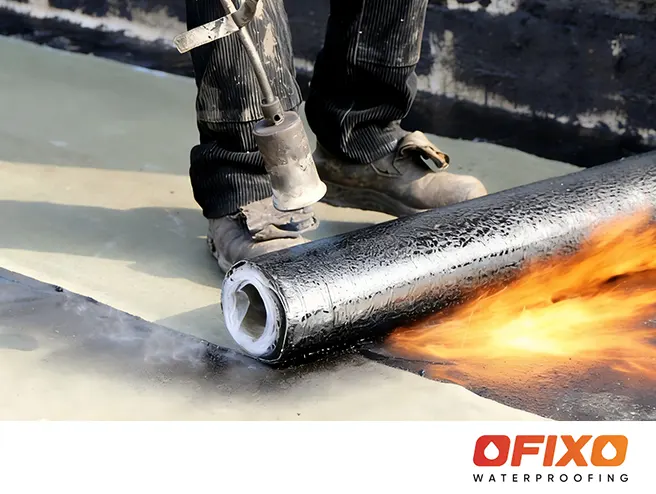
- External bituminous membranes (torch-applied or self adhesive)
- Sprayed polyurethane (PU) liquid coatings
- EPDM and HDPE pre formed sheets
- Bentonite waterproofing panels
Internal Waterproofing
Retrofit or Repair
Membrane applied to the INSIDE face of the structure – after construction – the only option when the basement is already built and finished. Stops water at the inner face under negative hydrostatic pressure.
Methods
- Cementitious crystalline coatings (bond chemically with concrete)
- Polymer modified cementitious slurries
- Crystalline admixtures (integral concrete additives)
- Resin injection grouting for active cracks
How We Waterproof
Three Methods for Basement Waterproofing & Leak Repair.
From new construction to active leaks in finished basements – these three methods address every scenario we encounter across Dubai.
External Membrane
Best for new constructionApplied to the outside face of the basement walls and slab before backfilling. The premium choice for new builds – stops groundwater before it ever touches your concrete. Methods include torch-applied bitumen, sprayed PU liquid, EPDM sheets, and bentonite panels.
Internal Cementitious Coating
Best for retrofit & refurbishmentApplied to the inside face of existing basements – typically polymer-modified cementitious slurry or crystalline coating. Bonds chemically with the concrete and resists negative-side hydrostatic pressure. The default solution for finished basements.
Injection Grouting
Best for active leaksPolyurethane or acrylic resin injected directly into cracks, joints, and seepage points where water is actively flowing. Expands on contact with water, sealing the leak permanently. Used for live water leakage repair in operating basements.
Warning Signs
Six Signs Your Basement Needs Waterproofing Now.
Most basement waterproofing problems start small and get worse silently. If you see any of these warning signs, call us for a free inspection – the earlier we catch it, the less it costs.
White Salt Deposits (Efflorescence)
White powdery or crystalline deposits on basement walls or floors – soluble salts being carried to the surface by water passing through the concrete.
Damp Patches or Wet Walls
Visible dark patches, water staining, or wet spots on basement walls – particularly in corners, at floor-to-wall junctions, or near construction joints.
Musty Smell or Visible Mould
Persistent damp odour, mildew on surfaces, or visible black/green mould growth – caused by chronic moisture even before liquid water is visible.
Cracks With Water Seepage
Active water seeping through cracks in walls or floors – particularly horizontal cracks, joints between pours, and around pipe penetrations.
Standing Water in Lift Pit
Pooled water in the lift pit, sump pit, or basement floor low points – even small amounts indicate hydrostatic pressure is winning.
Rust Marks From Rebar
Brown or orange rust staining bleeding through concrete walls – indicates rebar corrosion underneath, often a precursor to structural cracking.
What We Waterproof
Basement Leak Repair for Every Below-Grade Structure in Dubai.
From small lift pits in residential villas to multi-level commercial car parks – we waterproof every type of below-grade structure across the UAE.
Basement Car Parks
Multi-level underground car parks for commercial buildings, towers, and residential complexes – including traffic-grade waterproofing for the slab and walls.
Lift Pits
Lift pits sit at the lowest point of the building – first to collect water. Cementitious negative-side coatings stop ingress even under permanent hydrostatic pressure.
Sump Pits
Sump pits collect drainage water – they must be both waterproof and chemically resistant to detergents, oils, and standing water for years.
Retaining Walls
Below-grade retaining walls hold back soil and groundwater. Positive-side external membranes during construction; internal cementitious systems for retrofit.
Plant Rooms
Below-grade plant rooms housing pumps, generators, and electrical equipment – water ingress here is catastrophic. We specify high-grade systems with redundancy.
Basement Apartments & Storage
Habitable basement spaces, storage rooms, and home gyms – require systems that prevent dampness, mould, and condensation in addition to liquid water.
Step-by-Step
Our 6-Step Basement Waterproofing Process.
Whether you’re building new or refurbishing existing, our process follows the same disciplined sequence – only the specific products and application methods vary by project.
-
01
Site Inspection & Assessment
Free on-site visit. We assess the structure, identify active or potential water ingress points, check the existing waterproofing if present, and evaluate access for application methods.
-
02
System Recommendation
Based on the inspection – and whether the basement is new build, retrofit, or has active leaks – we recommend the right combination of external, internal, or injection methods.
-
03
Surface Preparation
Clean the substrate of dust, oil, paint, and loose debris. Repair cracks, honeycombs, and damaged areas with polymer-modified mortar. Install drainage where required.
-
04
Primer Application
Apply system-specific primer to the substrate – concrete primer for cementitious systems, dedicated primers for liquid PU or bituminous membranes. Allow proper tack-off.
-
05
Waterproofing System Application
Apply the selected waterproofing – external membrane during construction, internal cementitious slurry for retrofit, or injection grouting for active leaks. Multiple coats with reinforcement at details.
-
06
Quality Testing & Handover
Visual inspection, thickness verification, water ponding test where feasible, and 24–48 hour observation for negative-side systems. Documented warranty handover.
Why Ofixotech
Six Reasons Dubai Specifies Ofixotech for Basements.
Choosing the right contractor for below-grade work matters as much as choosing the right system. A leaking basement is one of the most expensive defects to fix after handover – get it right the first time.
Both Sides – Single Contractor
One specialist team for positive-side external membranes AND negative-side internal coatings – eliminating coordination failures between separate trades.
Active Leak Repair Capability
We don’t just install new waterproofing – we fix active leaks in operating basements through injection grouting, even where water is currently flowing.
Code Compliant Specifications
Specifications that meet Dubai Municipality, TRAKHEES, and Abu Dhabi Building Permit requirements – no handover delays, no compliance issues.
Long Service Life
Systems designed for 20+ year service life under Dubai’s high water table – the right chemistry survives where lesser systems fail in 5 years.
New Build & Retrofit Experience
Equal expertise on new construction projects and refurbishment of existing finished basements – including occupied buildings.
Documented Workmanship Warranty
Every project includes both manufacturer product warranties and our written workmanship guarantee – with documented maintenance guidance.
Water Coming Through Your Basement Wall?
Book a free site survey – we'll inspect the leak, identify the source, recommend the right solution, and quote within 24 hours.
or WhatsApp +971 55 770 5568
Answered
Basement Waterproofing FAQs.
The questions Dubai property owners and developers ask most about basement and below-grade waterproofing.
Why is basement waterproofing critical in Dubai?
Coastal Dubai sits on land where the groundwater table is often within 1–3 metres of the surface – meaning every basement is in constant contact with groundwater under hydrostatic pressure. Without correct waterproofing, water finds its way through any concrete pore, crack, or construction joint. Combined with reclaimed-land salinity, extreme thermal cycling, and Municipality compliance requirements, Dubai basements demand specialist waterproofing not commodity coatings.
What’s the difference between positive and negative side waterproofing?
Positive-side waterproofing is applied to the OUTSIDE face of the basement structure (the side facing the soil) before backfilling – typically during construction. It stops water before it touches the concrete. Negative-side waterproofing is applied to the INSIDE face of the structure after construction – the only option for finished or occupied basements. Negative-side systems must bond chemically with the concrete to resist water pressure pushing inward against them.
Can existing basements be waterproofed (retrofit)?
Yes – most existing basements can be retrofit-waterproofed using internal cementitious coatings, polymer-modified slurries, or crystalline systems. The work is typically more expensive than positive-side installation during construction (because you can’t access the external face), but it’s effective and stops most ingress permanently. Active leaks may also need injection grouting before the coating is applied.
What is the best waterproofing system for basements in Dubai?
For new construction: external bituminous or PU liquid membranes on the positive side give the longest service life. For retrofit on existing basements: polymer-modified cementitious slurry with crystalline action is the default – bonds chemically with concrete and resists negative pressure. For active leaks: PU resin injection grouting. The right system depends on construction stage, water pressure, and budget – we recommend after a free site survey.
How long does basement waterproofing last?
Quality basement waterproofing systems should last 20+ years when correctly specified and installed. External bituminous membranes typically last the life of the structure if undamaged during backfill. Internal cementitious crystalline systems are also engineered for decades of service. Injection grouting permanently seals the specific crack or joint where injected. Real lifespan depends on system selection, installation quality, and substrate condition.
How much does basement waterproofing cost in Dubai?
Cost varies significantly by basement size, system selected, structural condition, and access difficulty. New-build positive-side systems are typically more economical per m² than retrofit. Active-leak injection grouting is priced per metre of crack or joint. We quote per project after a free site survey – there’s no standard rate that fits every basement.
Can you stop active water ingress in an existing basement?
Yes – injection grouting with polyurethane or acrylic resins can permanently seal cracks, joints, and seepage points where water is actively flowing. The resin expands on contact with water, filling the void and bonding to the concrete. For widespread ingress, we typically combine injection grouting (to stop the active leak) with internal cementitious coating (to prevent future leaks elsewhere).
Do you provide a warranty?
Yes – every basement waterproofing project includes both the manufacturer’s product warranty (typically 10–25 years depending on the system) and our written workmanship guarantee covering the installation. The warranty document specifies the maintenance schedule required to keep it valid. We provide the warranty documentation at project handover.