
Premium Seamless Finish · Dubai & UAE
Self-Levelling Epoxy Flooring – Premium Seamless Finish for Showrooms, Galleries, and Architectural Interiors.
Specialist self-levelling epoxy flooring across Dubai and the UAE – free-flowing two-component epoxy systems that pour and level under gravity to a perfectly flat, monolithic, seamless finish. Specified by architects and interior designers for automotive showrooms, boutique retail, art galleries, hospitality lobbies, and premium residential where the floor is part of the architecture, not just protection.
- Custom RAL colours
- Seamless monolithic finish
- 500×500mm sample plates
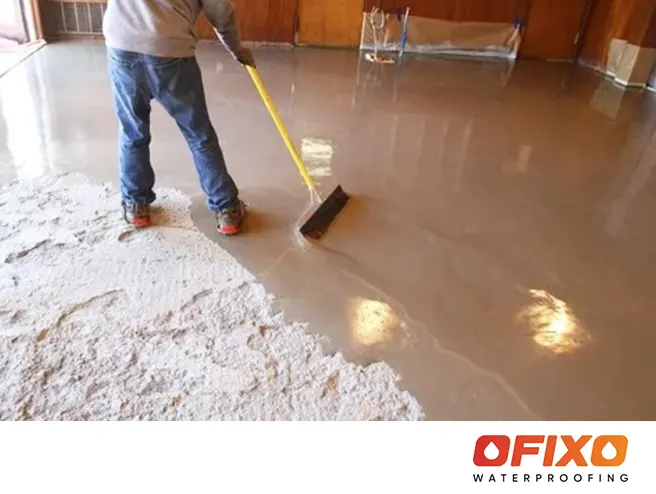
Poured. Levelled. Seamless.
What is Self-Levelling Epoxy?
Self-levelling epoxy flooring is a family of free-flowing, low-viscosity two-component epoxy systems engineered to pour onto a prepared substrate and level under gravity to a perfectly flat, mirror-like surface – without trowel marks, without joints, without grout lines. Build thickness from 1.5mm light SL up to 8mm heavy SL with substrate-correction capability. The pour-and-level mechanism delivers something hand-applied epoxies physically cannot: a monolithic, seamless, uniform-thickness finish across large areas.
Specified by architects, interior designers, brand owners, and retail developers across Dubai’s premium spaces – automotive showrooms, boutique retail fit-outs, hospitality lobbies, art galleries, and high-end residential. The defining commercial choice: when the floor is part of the architecture and the design intent is uniform colour, seamless flow across large open areas, and a hand-finished aesthetic that survives commercial traffic. Custom RAL colour matching, metallic pigments, polished sealers, and sample plate approval before site work commences.
The Architectural Case
Four Reasons Designers and Brand Owners Specify SL Epoxy.
Self-levelling is the epoxy specification chosen for what it visually delivers – not what it survives. Four specific design-driven reasons put SL on the architect’s spec sheet and the brand owner’s fit-out brief.
Seamless Monolithic Finish
No joints. No grout lines. No tile edges. The floor pours and levels to a single continuous surface across hundreds of square metres – architecturally clean, visually quiet, and the only finish that actually allows the eye to move uninterrupted across an open-plan space. Hand-trowelled epoxies cannot do this; SL is what the architect specifies when seamless matters.
Custom RAL & Pigment Matching
Brand-aligned custom colour matching to any RAL number or to physical brand swatches. Metallic pigments, micro-flake suspensions, two-tone designs with poured borders – all delivered as part of the SL system. Sample plates approved by the design team before site work; what’s signed off is what gets installed.
Flatness for Open Architectural Spaces
Showrooms, galleries, and lobbies need flatness – uneven floors read visually as cheap finish, regardless of material cost. SL pours self-correct the substrate (within thickness range) and deliver flatness deviation typically ≤3mm per 3m. Critical where reflective lighting design or polished topcoats will amplify any surface unevenness.
Premium Aesthetic at Commercial Durability
Architects pick SL because it looks like resin art and performs like commercial floor – hygienic, sealed, chemically resistant, easy to clean, and durable enough for 10–15 years of showroom or retail traffic. Premium finish that survives operational use is the brief; SL is the answer that satisfies both.
Build-Specific Specification
Three SL Build Profiles. Three Different Substrate Stories.
Self-levelling isn’t one product – it’s three build-thickness profiles, each engineered for a different substrate condition and aesthetic demand. Choosing the right profile is what determines whether the finished floor delivers the design intent or fights it.
Light Self-Levelling
The lightest SL profile – for substrates that are already flat and sound, where the SL exists purely to deliver the aesthetic finish and seal the surface. No substrate correction; the system follows the existing profile. Most cost-efficient option when the substrate is in good condition.
Standard Self-Levelling
The mainstream SL specification – balances finish quality with minor substrate correction capability. Can absorb minor undulations and small surface defects without showing through. The default specification for retrofit projects on existing concrete substrates where modest levelling is welcome.
Heavy Self-Levelling
The heaviest SL profile – significant substrate correction capability while maintaining the seamless finish. Used where the substrate is worn, uneven, or has level transitions that need eliminating. Premium specification when the architect wants flatness restored as part of the floor finish.
Brand-Led Project Scenarios
Four Architectural Project Patterns We Deliver.
Self-levelling is the epoxy chosen by architects, brand owners, and interior designers. Each project type comes with its own design intent, finish demands, and approval process. Here’s how we scope the four most common SL project patterns across Dubai.
Automotive & Luxury Showroom
Design Intent
- Premium brand floor
- Doesn’t compete with vehicles
- Reflective seamless surface
Typical Specification
Standard or Light SL (1.5–5mm) in brand-matched RAL colour or polished neutral. High-gloss polished sealer for showroom reflection. Coloured zoning at service-area boundaries if integrated.
Delivery Profile
Programme-aligned to fit-out completion. Sample plate approval by brand design team typically 6–8 weeks before installation. Phased around vehicle access if showroom is operational.
Boutique Retail & Flagship Stores
Design Intent
- Supports brand storytelling
- Custom colour to brand identity
- Survives daily customer traffic
Typical Specification
Standard SL (3–5mm) in brand-matched custom RAL colour or metallic pigment. Matte or satin sealer per design intent. Border details and zone transitions delivered as part of system.
Delivery Profile
Tight programme inside retail fit-out window. Sample plate approval by brand HQ design team. Coordinated with shopfitting, lighting, joinery installation.
Art Gallery & Cultural Space
Design Intent
- Disappears beneath the artwork
- Reflective qualities controlled
- Conservation-grade durability
Typical Specification
Standard SL (3–5mm) in conservation-neutral colour (often warm grey, off-white, or muted tones). Matte sealer to control reflection of gallery lighting. Anti-static additive in some specifications.
Delivery Profile
Long lead time for sample approval (often 2–3 rounds). Phased around exhibition cycles. Installation typically during gallery between exhibitions or before opening.
Hospitality Lobby & Premium Public Space
Design Intent
- Statement entry experience
- Matches interior architecture
- Survives premium traffic
Typical Specification
Standard or Heavy SL (3–8mm) in brand-aligned custom colour. Often metallic flake or two-tone designs with poured borders. Polished sealer for premium reflection. Anti-slip aggregate at thresholds.
Delivery Profile
Phased around hotel construction sequence; new builds typically pre-opening, refurbs coordinated with hotel closures. Sample plate approval by hotel design team and brand standards group.
Scenarios drawn from typical project patterns we deliver across Dubai’s premium fit-out ecosystem. Real project references available under NDA at quote stage; sample plates produced for design team approval before site work.
Step by Step
Our 6-Step Self-Levelling Installation Process.
SL projects are won and lost at the sample plate stage. Our process is built around design team approval, then disciplined execution of exactly what was signed off.
-
01
Design Team Survey & Brief
Meet with architect, interior designer, or brand design team. Review design intent, RAL colour references, finish samples, lighting strategy, and overall fit-out vision. Confirm build profile (Light/Standard/Heavy SL) based on substrate condition and design demand.
-
02
Sample Plate Production
Produce 500×500mm sample plate on substrate-matched panel showing exact colour, finish sealer, and any decorative elements (metallic flake, two-tone, borders). Up to 3 iterations standard before final approval. Signed plate forms the basis of execution.
-
03
Substrate Preparation
Diamond grinding to remove laitance and contamination. Substrate moisture testing (must be <4% before coating). Crack and pit repair where defects exceed system correction capability. Surface profile CSP-3 to CSP-5 per manufacturer specification.
-
04
Primer Application
Two-component epoxy primer applied to prepared substrate. Penetrates concrete pore structure and creates the bond layer for the SL pour. Strict moisture and temperature control (typically below 80% RH, substrate temp 10°C–30°C).
-
05
SL Pour & Levelling
SL resin mixed and poured to manufacturer-specified depth. Spike-roller traverse across the surface releases entrapped air. Material levels under gravity to flat finish. Programme-critical stage – workable time is typically 30–45 minutes from pour, dependent on ambient conditions.
-
06
Topcoat Sealer & Handover
Topcoat sealer applied per approved sample – high-gloss, satin, or matte. 24-hour cure for foot traffic; 7-day cure for full hardness. Handover pack: signed sample plate, batch records, datasheets, photographs, warranty paperwork. Snag-list inspection with design team.
Why Ofixotech
Six Reasons Architects and Brand Owners Specify Ofixotech.
SL projects test contractors on colour matching discipline, finish quality, programme alignment to fit-out, and the patience to do sample plates properly. Here’s why design teams across Dubai work with us.
Sample Plate Discipline
Every project gets 500×500mm sample plates on substrate-matched panels before site work. Up to 3 iterations standard, signed off by design team. What’s approved is what gets installed – no surprises on handover day.
Architect-Aligned Programme
We work inside fit-out programmes – coordinated with main contractor, shopfitter, joinery, lighting installer. Handover dates hit on schedule because we treat them as opening dates.
RAL & Pigment Matching
Custom RAL colour matching to any reference, metallic pigments, two-tone designs with poured borders, micro-flake suspensions. Manufacturer-tinted batches and on-site quality control to maintain colour consistency across large floors.
Manufacturer Partnerships
Sika Sikafloor SL, Fosroc Nitoflor SL, BASF MasterTop SL, Mapei Mapefloor SL ranges. Direct manufacturer relationships with technical support, batch records, and warranty backing on architectural specifications.
Flatness & Substrate Discipline
SL flatness deviation typically ≤3mm per 3m at handover. Substrate moisture testing, ambient humidity monitoring, surface temperature verification – the discipline that determines whether the finish is gallery-quality or contractor-quality.
Documented Warranty
Manufacturer product warranty: typically 10–25 years on cured SL systems. Our written workmanship guarantee: typically 2 years on installation. Combined warranty pack with signed sample plate, batch records, datasheets, photographs, and manufacturer paperwork at handover.
Showroom, Gallery, or Premium Fit-Out?
Free sample plate – we produce a 500×500mm sample on substrate-matched panel showing exact colour, finish, and any decorative elements for design team approval before site work.
or WhatsApp +971 55 770 5568
Answered
Self-Levelling Epoxy Flooring FAQs.
The questions architects, interior designers, brand owners, retail developers, and fit-out main contractors ask most about SL epoxy in Dubai.
What’s the difference between self-levelling and other epoxy systems?
Self-levelling is poured rather than hand-applied – the resin flows under gravity to a perfectly flat, seamless, monolithic surface. Hand-applied systems (roller-applied solvent-free, trowel-applied polymer mortar) leave application marks and follow substrate undulation. SL delivers what hand-applied physically cannot: uniform thickness across hundreds of square metres with no joints, no trowel marks, and corrected flatness. It’s the specification for architectural projects where the floor is part of the design intent.
Which build profile do I need: Light, Standard, or Heavy SL?
Driven by substrate condition. Light SL (1.5-3mm) suits new, sound, level substrates where SL purely delivers the aesthetic finish. Standard SL (3-5mm) is the mainstream specification for retrofit projects on existing concrete with minor undulation – corrects up to ±3mm across 3m. Heavy SL (5-8mm) handles significant substrate correction up to ±8mm, common on refurbishment of older spaces. We confirm profile at survey based on actual substrate measurement.
Can you match my brand colour exactly?
Yes – custom RAL colour matching is standard. We work from RAL numbers, physical brand swatches, Pantone references, or printed brand guidelines. Sample plates produced and approved by the design team before site work. Manufacturer-tinted batches with batch records to maintain colour consistency. Metallic pigments, micro-flake, and two-tone designs with poured borders all available as part of the system.
How does the sample plate process work?
We produce a 500×500mm sample plate on substrate-matched panel showing the exact specification – colour, sealer (matte/satin/gloss), and any decorative elements like metallic flake. Up to 3 iterations are standard before final design team sign-off. The signed plate forms the reference for site installation; what’s approved is what gets installed. Sample plate production typically takes 1-2 weeks per iteration.
What does the finish look like over time?
Properly installed SL on sound substrate maintains its appearance for 10-15 years in commercial traffic, 15-25 years in light-traffic premium residential or gallery use. Sealer topcoats may need periodic refresh (every 5-10 years in heavy commercial) to maintain gloss level; the SL itself doesn’t degrade. The variable that affects longevity isn’t the SL chemistry – it’s maintenance regime and any impact damage.
What happens to substrate cracks under the SL?
Existing cracks need treatment before SL pours. Static (non-moving) cracks: we fill with epoxy mortar and the SL covers seamlessly. Active (moving) cracks: SL alone won’t span them and they’ll likely telegraph through within months. Active cracks need joint detail or structural repair before SL – flagged at survey. The substrate condition determines what’s possible aesthetically; this is part of the survey conversation, not a surprise on installation day.
Is SL epoxy suitable for showrooms with vehicles or heavy equipment?
Yes for showroom-grade demands (vehicle parking, foot traffic, valet operations), no for industrial-grade demands (continuous forklift traffic, machinery point loads, chemical exposure). SL is engineered for premium commercial – showrooms, galleries, retail, hospitality. For industrial-grade demands see our Industrial Epoxy Flooring page; for warehouse-grade see Warehouse Epoxy. Wrong specification for wrong demand is the failure mode we screen for at survey.
What warranty do you provide?
Manufacturer product warranty: typically 10-25 years on cured SL systems from Sika, Fosroc, BASF, Mapei (period varies by system and exposure). Our written workmanship guarantee: typically 2 years on installation. Combined warranty pack at handover: signed sample plate, batch records, datasheets, photographs, manufacturer paperwork, and snag-list sign-off. Audit-ready for FM asset register, fit-out completion records, and any future renovation reference.